
Changing Lives, One By One

COLIN & ANA BARROW
(DCI 2018-19)
Ana and Colin brought into their DCI fellowship year an unusual variety of experience. Colin has been a construction lawyer; an executive at the world’s largest quoted hedge fund; the leader of Westminster City Council (effectively mayor of London’s most important borough); a reformer in urban regeneration, housing and public education; and a non-profit leader in large UK charities. Ana, whose graduate degrees and career are in education, has lived and worked in Brazil, Mexico, the US, the UK, and Switzerland and speaks five languages.
In the face of demand for their talent from a range of organizations as broad as their experience and networks, post-DCI Ana and Colin have arrived at a surprisingly simple “joyful journey.”
Ana and Colin Barrow decided to contribute to exceptional individuals at crucial moments in their lives when funding could help create a “tipping point” for success. Colin describes the pleasure this path has brought them – “It’s a bit like the experience I had in local government in the UK; you see the fruits of your labor in very tangible ways.” An additional benefit to this work is that the individuals they help have become trusted guides to making future donations to others in similarly complex and difficult environments.
Through Ana’s Brazilian network, Ana and Colin met Alex, a talented photographer and videographer, who was from a very poor community; his father had been a drug addict and his brother was in jail. When he met Ana and Colin, Alex had earned a place at a university but could not afford to go. Not attending university meant that he would lose his internship at a nationally respected media company, a critical situation. Ana and Colin not only stepped in to pay Alex’s university fees but also personally mentored him in critical life skills often not available to those with his background.

Ana and Colin with Alex, the recepient of
their support and generosity.
The Barrows’ decision to help Alex was not impulsive but rather reflected their long experience. It was important to Ana and Colin that Alex already had a clear career direction, had proven his willingness to learn, and had made a positive start towards developing his ambition.
Soon Alex will complete his degree, a prospect that is immensely satisfying to the Barrows. Further, Alex, who continues to live in the community where he grew up, is helping Ana and Colin to identify “the next Alex.” He is well-equipped to judge the merits of others from his and similar communities.
The Barrows’ recent experience with victims of the invasion of Ukraine illustrates the potential scope of directly investing in people who need help. Earlier in their lives Ana and Colin had befriended Olga, a hard-working young Ukrainian hospitality worker. She eventually returned to Odessa and became a middle-class shop owner. When the war broke out, she fled to Moldova with her family. The Barrows figured out how to find her, arranged to meet her in Bucharest, and handed her plane tickets to Ireland. Through their networks they helped Olga and her husband find employment in Ireland that allows them to save and in turn help their fellow countrymen. Other donors are now supporting this work and Olga is helping to identify other war refugees that need a helping hand.
It does not bother the Barrows that their approach may not be massively scalable. What is important to them is transforming lives by finding the people at critical inflection points in their lives and providing the right support at the right time. It is a small-scale, but targeted approach because they want to maximize the impact they are able to have and the likelihood that their beneficiaries will extend a hand to others.

The Barrows who enjoy visiting DCI friends around the globe, are shown catching up with Herb and Jeanine Riband (DCI 2018/19) in Switzerland.
Ana and Colin’s desire to personally engage with those they are helping, rather than simply making donations to worthy causes through large charities, is a direct result of their time in the DCI program. Sponsoring students and refugees with nowhere else to turn seems, Colin says, “a way to deliver the impact we need reliably.”
The Barrows are now forming a UK-based charity with a US arm to allow like-minded people to join them on this joyful journey. As Colin puts it, “our aim is simple – we just want to transform lives, one by one.”
"Mary Ellen exemplifies the mission of the DCI Fellowship. Through her intellectual leadership, strategic insight, and deep commitment to inclusion, she has made significant contributions to the Stanford Center for Neurodiversity and Human Potential.
As a trusted advisor to the Center, she has helped shape ideas and initiatives that advance understanding, opportunity, and belonging for neurodivergent individuals. Her work contributes to a growing global dialogue on how diverse minds strengthen organizations, enrich communities, and unlock human potential. Her efforts embody the transformative influence that one dedicated leader can have in creating a more inclusive and innovative world."
Dr. Lawrence Fung
Director, Stanford Medicine Center for Neurodiversity and Human Potential, Associate Professor of Psychiatry and Behavioral Sciences (Major Laboratories & Clinical Translational Neurosciences Incubator)
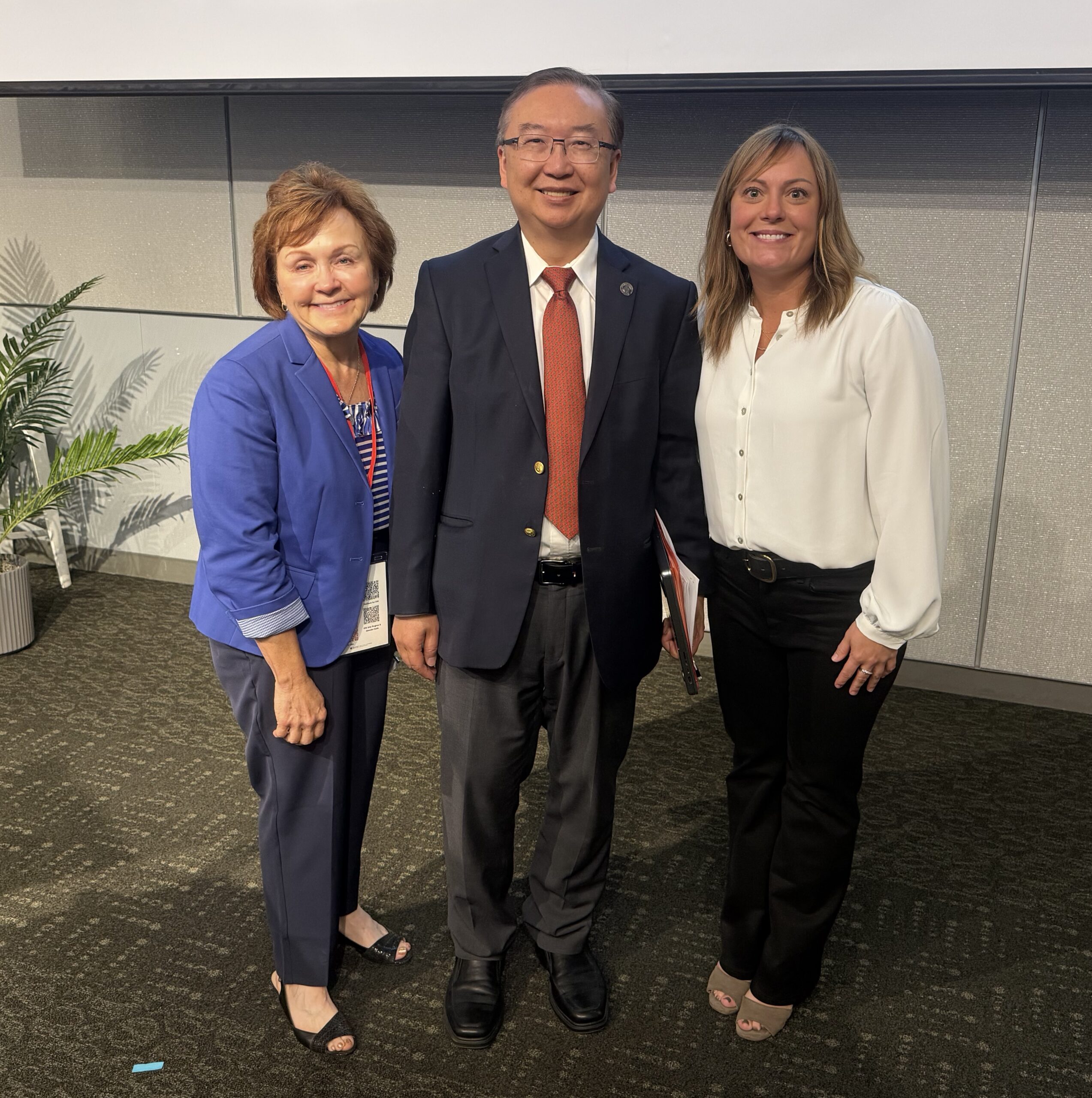
Mary Ellen with Dr. Lawrence Fung and Tarena Shanaberger (Microsoft) at Stanford's Neurodiversity Summit 2026.
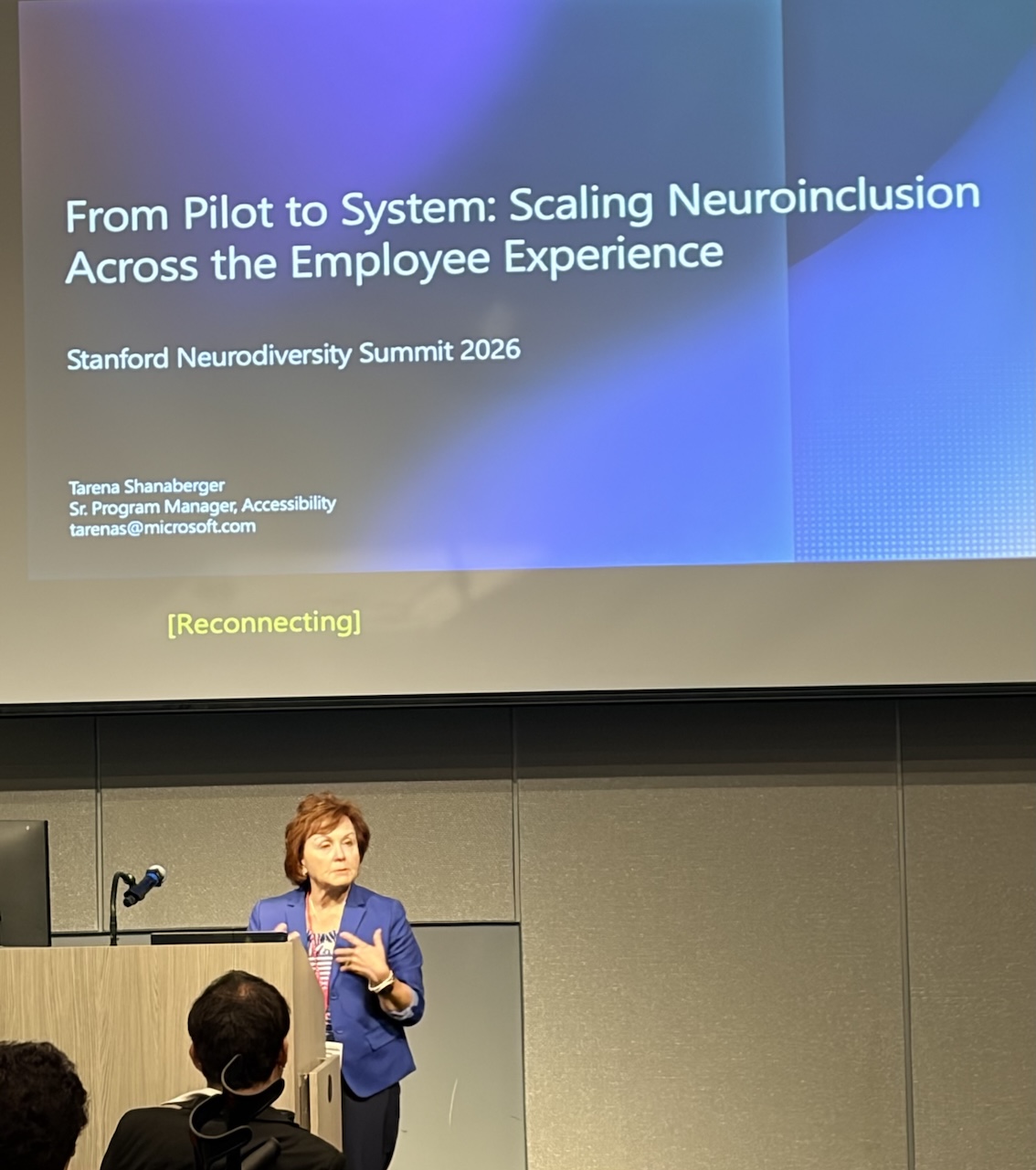
Mary Ellen addressing attendees at Stanford's Neurodiversity Summit 2026.
At the same time, I found deep fulfillment mentoring students across the university. Guest lecturing in Design Thinking classes for both graduate and undergraduate students allowed me to blend storytelling, leadership experience, and coaching, helping students explore how to design meaningful lives aligned with their values and aspirations. Their curiosity, resilience, and willingness to rethink their own paths inspired me daily and reminded me how energizing it is to support people at pivotal moments in their lives.
The impact of DCI didn’t end when the program did. It sparked two defining new paths. The first was my continued partnership and Advisory role with Dr. Fung and the Center for Neurodiversity and Human Potential, where I remain engaged in helping expand the reach and impact of neurodiversity research. The second was the creation of a transitions‑focused program rooted in identity, mattering, and design thinking — themes often overlooked during major life changes. After returning to Ohio, I developed and began piloting this program across the NE Ohio region helping people navigate change with greater clarity and confidence. I am now exploring university partnerships to scale its reach.
Alongside these new endeavors, I continue serving on public and nonprofit boards, applying decades of leadership experience to organizations committed to expanding opportunity and inclusion. Across all of this work, research, coaching, board service, the through‑line is clear: helping people and institutions recognize potential that might otherwise be overlooked.
DCI didn’t just open a new chapter. It reshaped the trajectory of my engagement - connecting lived experience, scholarship, and purpose in ways I never anticipated — and in ways that continue to allow me to grow.