
ReMAKE UK
A Second Chance for Ex-Offenders

KAMEEL KHAN
(DCI 2017)
Prison – You may be confined by it, do not be defined by it. As a former judge and lawyer, Kameel Khan (DCI 2017) knows this to be true. He has transferred and modified Stanford’s Project ReMade to the United Kingdom to provide ex-offenders an opportunity to establish a new life.
Upon entering the Stanford DCI program in 2017, Kameel Khan’s focus was in the rehabilitation of ex-offenders. As a lawyer, judge and former law professor, his background included defending people on death row from the Caribbean before the Privy Council (UK), the highest court of appeal for that region. Kameel also headed up the Ex-Offenders Programme at the Prince’s Trust Mosaic, a program that seeks to provide mentoring, training and employment for ex-offenders through partnerships created with corporations.
While taking courses at Stanford Law School, Professor Bob Weisberg introduced Kameel to Project ReMade, a program conceived by Stanford students in 2010 with the goal of assisting individuals re-entering society from prison to find and maintain stable employment. Project ReMade continues to be jointly run by the Law School and Graduate School of Business.
What has happened since you completed the DCI program?
Stanford pivoted me from the corporate world. I decided I would use my experience as a judge and lawyer dealing with ex-offenders to create a platform to help that group succeed in the outside world. Returning home, I brought the ReMade concept to the UK at Kings College, University of London.
Tell us about ReMAKE UK
The basic program involves 16 “entrepreneurs” (ex-offenders), 16 business/law school students and 16 business mentors. In order to qualify for the program, the “entrepreneur” must be at least one year out of prison, sign a contract committing to full participation and have an idea for a business.
Their participation in ReMAKE enables them to integrate into society in a very legitimate way. During the program, they are taught by student teachers and receive guidance and feedback on their business plans from faculty and business mentors. At the end of the 12-week program each “entrepreneur” receives a graduation certificate. This is a big deal since many never graduated from high school, much less attend a university.
How did your DCI experience influence your work establishing ReMAKE UK?
My time at Stanford was transformative. The “gap year” provided me with the time and resources that enabled me to better think about what I wanted to do. We set up ReMAKE UK using the practices I acquired from Stanford’s d.school. Similar to DCI, key principles of ReMAKE UK are purpose and community. And I’m proud to say that several DCI Fellows, including Maria Admundson and Rick Woolworth (both DCI 2017), provide support and mentor content to the program.
A big part of my Stanford DCI experience was learning the power of storytelling from Professor Jennifer Aker. In our new “Tell My Story” program, ReMAKE UK graduates go into public schools at the middle and upper level to share their stories. The schools really value this unique experience for their students. Students understand the criminal justice system directly from those who have been through it.

Project ReMAKE Entrepreneurs celebrate with Kameel (center)
What’s next for ReMAKE UK?
ReMAKE UK has recently partnered with a training provider to offer over 300 free courses to our entrepreneurs. In addition, we are working with them on their “Virtual Campus” which is the technology platform for providing courses to people in prison.
This year we launched a program with the University of Lancashire where we apply, on behalf of prisoners, for any tax rebate due to them while they were working or self-employed. Many of our entrepreneurs have never filed a tax return. The first 12,000 Pounds Sterling is not taxed as a personal allowance, so we claim back tax which should not have been deducted when originally paid (similar to payroll tax in USA). This puts a little extra money in their pocket. Most people avoid prisoners. We need to remember that they’re people. They are someone’s son/daughter/father /mother.
In the ReMAKE program, they are treated with civility and are accepted by their new community. As we remind our entrepreneurs, “Prison – You may be confined by it, do not be defined by it.”
What are the results?
We were able to get all our entrepreneurs a job placement in our first year program. A job is transformative for an ex-offender. One entrepreneur said “getting a job gave me goosebumps.” On graduation day the entrepreneurs bring along their family. It is their way of saying “look at me now!” I have met several moms and the message is always the same – my child now believes he can be a somebody.
John, a current participant, states, “It is a privilege and a wonderful opportunity to be part of Project ReMAKE, I felt a sense of community and belongingness within its fold. The difficulties of accepting and forgiving one’s past and reconciling with the present is always a challenge for anyone who has traversed similar paths, it is a bridge to a future with renewed courage and outlook for a fulfilling life ahead. A place of being oneself free of judgement and ridicule from downfalls endured, imbued with noble ideals that encourages rising up towards inspired beginnings, to hope anew, to dream again.”
Learn more about Kameel Khan’s background.
"Mary Ellen exemplifies the mission of the DCI Fellowship. Through her intellectual leadership, strategic insight, and deep commitment to inclusion, she has made significant contributions to the Stanford Center for Neurodiversity and Human Potential.
As a trusted advisor to the Center, she has helped shape ideas and initiatives that advance understanding, opportunity, and belonging for neurodivergent individuals. Her work contributes to a growing global dialogue on how diverse minds strengthen organizations, enrich communities, and unlock human potential. Her efforts embody the transformative influence that one dedicated leader can have in creating a more inclusive and innovative world."
Dr. Lawrence Fung
Director, Stanford Medicine Center for Neurodiversity and Human Potential, Associate Professor of Psychiatry and Behavioral Sciences (Major Laboratories & Clinical Translational Neurosciences Incubator)
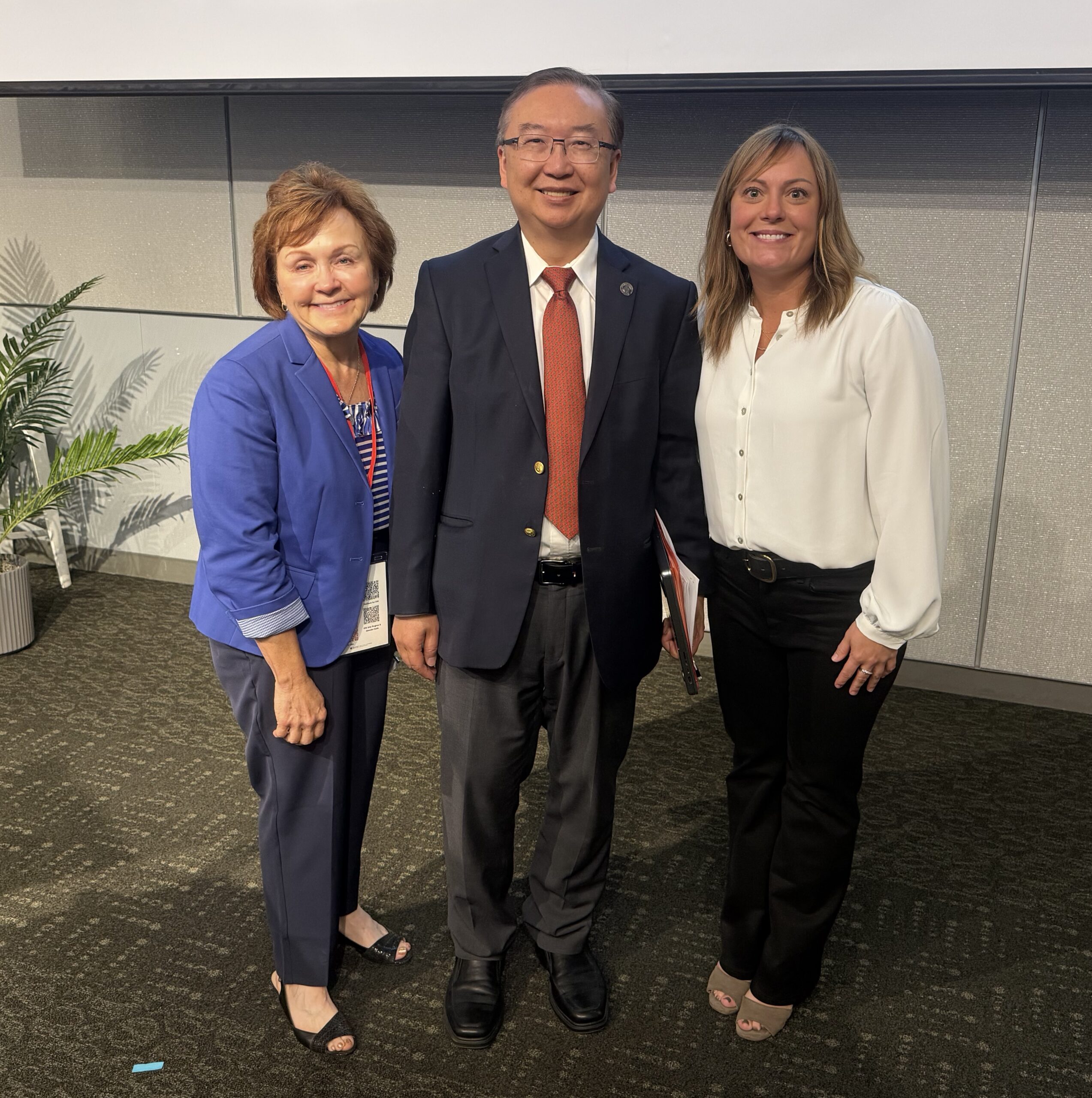
Mary Ellen with Dr. Lawrence Fung and Tarena Shanaberger (Microsoft) at Stanford's Neurodiversity Summit 2026.
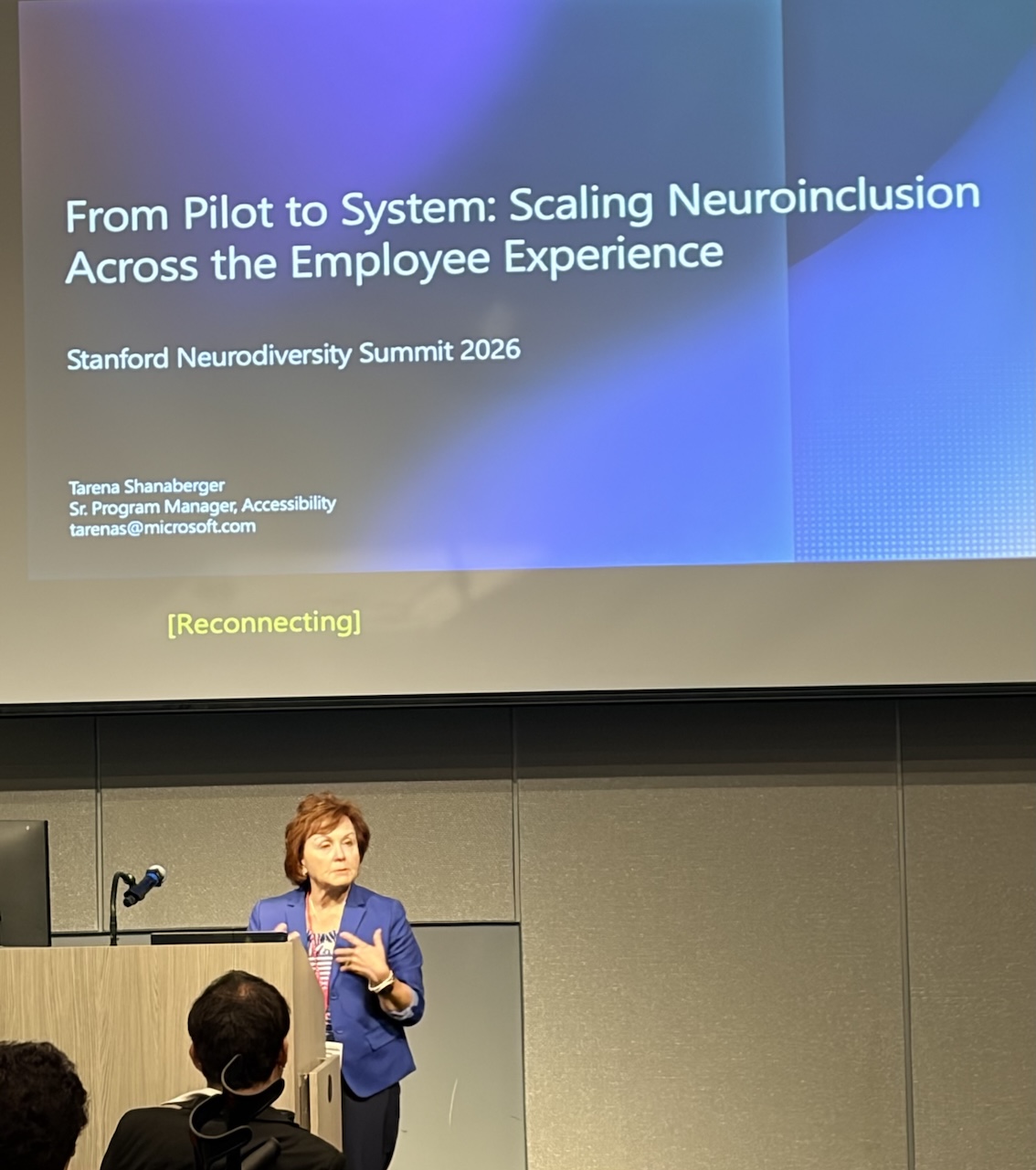
Mary Ellen addressing attendees at Stanford's Neurodiversity Summit 2026.
At the same time, I found deep fulfillment mentoring students across the university. Guest lecturing in Design Thinking classes for both graduate and undergraduate students allowed me to blend storytelling, leadership experience, and coaching, helping students explore how to design meaningful lives aligned with their values and aspirations. Their curiosity, resilience, and willingness to rethink their own paths inspired me daily and reminded me how energizing it is to support people at pivotal moments in their lives.
The impact of DCI didn’t end when the program did. It sparked two defining new paths. The first was my continued partnership and Advisory role with Dr. Fung and the Center for Neurodiversity and Human Potential, where I remain engaged in helping expand the reach and impact of neurodiversity research. The second was the creation of a transitions‑focused program rooted in identity, mattering, and design thinking — themes often overlooked during major life changes. After returning to Ohio, I developed and began piloting this program across the NE Ohio region helping people navigate change with greater clarity and confidence. I am now exploring university partnerships to scale its reach.
Alongside these new endeavors, I continue serving on public and nonprofit boards, applying decades of leadership experience to organizations committed to expanding opportunity and inclusion. Across all of this work, research, coaching, board service, the through‑line is clear: helping people and institutions recognize potential that might otherwise be overlooked.
DCI didn’t just open a new chapter. It reshaped the trajectory of my engagement - connecting lived experience, scholarship, and purpose in ways I never anticipated — and in ways that continue to allow me to grow.