
Taking the Concept of “Community” Home
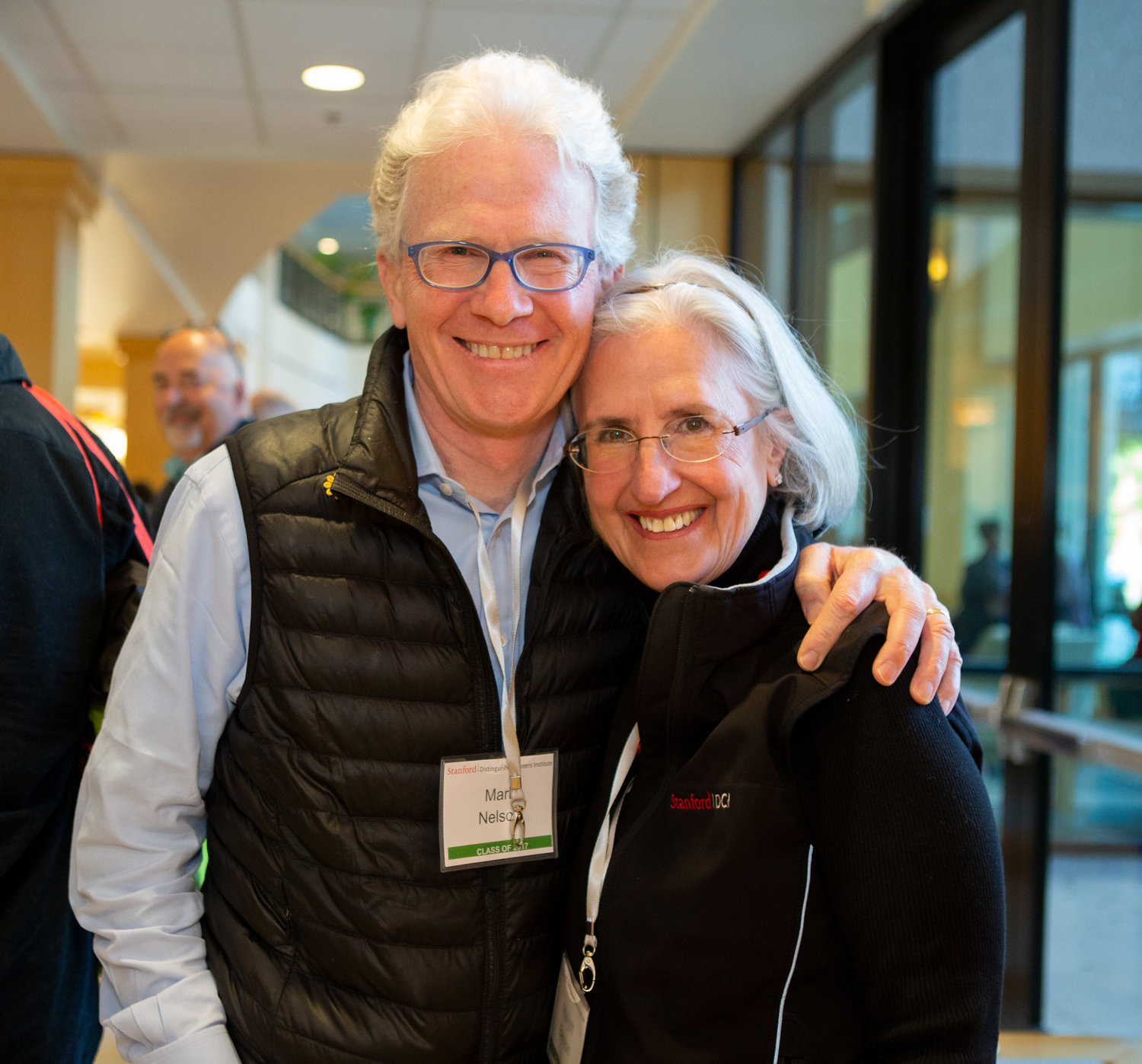
MARK NELSON & MARGRIT BENTON
(DCI 2017)
Former attorneys Mark Nelson and his wife, Margrit Benton, spent several years living in Indonesia and Singapore before participating in the Stanford DCI program in 2017. As a commercial lawyer, Mark advised multinational corporations, private equity investors and financial advisors. Margrit focused on securities and antitrust matters, as well as a pro bono death penalty case.
In addition to their DCI fellowship, living and working in Singapore and Indonesia for nearly 30 years prior to entering the program gave them the tools and the cultural learnings to approach their new roles with a sense of gratitude “for the ability to help out.”
Margrit Benton and Mark Nelson (DCI 2017) didn’t plan on moving back to Margrit’s childhood home in Denver to take care of her aging father after their DCI year.
Both of them agree that they just “fell into it.” And both of them agree that they would not have traded the experience for anything.
Margrit’s dad, Ed Benton, passed away earlier this year. He died in the home he shared with his beloved daughter and son-in-law, surrounded by a neighborhood and community he had built over a lifetime, in close contact with his grandchildren and having met at least half of Margrit and Mark’s DCI cohort.
Although their caregiving journey was unplanned, both Margrit and Mark attribute their ability and willingness to embrace the experience to the sense of community they developed during their time at Stanford.
“The focus on community” during the program and “the relationships that came out of that year” stayed with the couple as they considered what to do next. After a year of traveling, the question was answered when Ed had a catastrophic fall and needed round-the-clock care.
It was an “easy thing” to make the decision to help Ed stay in his home, said Mark. Ed was an “engaged, easy-going 92-year-old, with a great sense of humor.”
Moving to Denver, Margrit and Mark also put their DCI community-building lessons to work in figuring out “how to create a community when you haven’t been a part of it for 30 years.” The pandemic made the lessons they’d learned about community even more relevant, as they welcomed neighbors and friends visiting Ed as his mobility declined and held cocktail hours on the terrace behind “Opa’s” house – Ed’s pet name from his grandkids – to discuss local and world affairs.
With Ed, “it was not about the food, but about the conversation,” said Margrit. But while Ed relished the social interaction, those lucky enough to find themselves on “Opa’s Porch,” as the couple’s daughter, Emily called it, took away much more. In her college essay about lessons learned on that porch, Emily wrote, “We had to talk about the real issues,” or in Ed’s words, “Cut the persiflage!” Persiflage is what Ed called mindless chatter. He wanted his grandkids to engage with current problems and tell him what they would do to fix them.
It would be wrong to understand Mark and Margrit’s caregiving as one-sided. Although Mark jokes that they lived under “house arrest” for two years with a “full-time low-intensity job,” both he and Margrit agree that to “focus on someone other than yourself” was a transformative and joyful experience.
Not only DCI but their nearly 30 years living and working in Singapore and Indonesia prior to entering the program gave them the tools and the cultural learnings to approach their new roles with a sense of gratitude “for the ability to help out.”
During their years abroad, Mark and Margrit and their kids internalized the “strong desire for families to accommodate old folks around them.”
“Older people are not as isolated” in Asian cultures, Mark pointed out.
“Multi-generational housing is the norm,” said Margrit.
Back in Denver, the intergenerational learnings continued. “We learned so much from the community around us,” Mark said. Ed’s community — built over a lifetime of professional and civic involvement — became theirs. It encompassed “an extraordinary age range” that was a gift to all involved.
The couple’s recent experience also brought home the fact that longer lives may not necessarily mean more time for world-changing projects or huge social impact.
“The reality of many people’s experiences as we age,” Margrit argues, “may be that we don’t have the ability to do all the things we thought we could do. So we need to celebrate what we can still do.”
Recognizing that reality, both Mark and Margrit believe, should be an integral part to designing a life going forward, for our aging family members and for ourselves.
Or, as Margrit put it, all of us need to think, and talk to our families, about this question: “If you only get three things” as you get older, what are the three things that you want to be able to do?”
In Ed’s case, he wanted to “(1) go to lunch at the club to see his friends; (2) have people around the dinner table; and (3) sit on his porch where he could interact with people walking by.”
For three years, Margrit and Mark gave Ed his three things and more. He gave them his company, his wisdom, and his community. To hear them tell it, they got the better end of the deal.
The memorial flyer at Ed’s recent memorial service contained Ralph Waldo Emerson’s famous lines:
“To laugh often and much; To win the respect of intelligent people and the affection of children; to earn the appreciation of honest critics and endure the betrayal of false friends; to appreciate beauty; to find the best in others; to leave the world a bit better whether by a healthy child, a garden patch, or a redeemed social condition; to know even one life has breathed easier because you lived. This is to have succeeded.”
Although they would never put it this way themselves, Margrit and Mark have also “succeeded.”
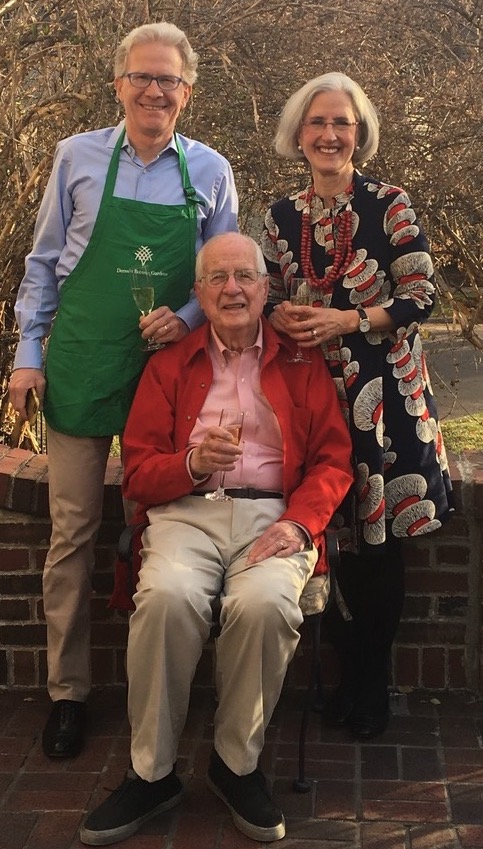
Mark, Margrit and Ed (aka “Opa”) enjoy a glass of wine together on a mild Denver afternoon.
"Mary Ellen exemplifies the mission of the DCI Fellowship. Through her intellectual leadership, strategic insight, and deep commitment to inclusion, she has made significant contributions to the Stanford Center for Neurodiversity and Human Potential.
As a trusted advisor to the Center, she has helped shape ideas and initiatives that advance understanding, opportunity, and belonging for neurodivergent individuals. Her work contributes to a growing global dialogue on how diverse minds strengthen organizations, enrich communities, and unlock human potential. Her efforts embody the transformative influence that one dedicated leader can have in creating a more inclusive and innovative world."
Dr. Lawrence Fung
Director, Stanford Medicine Center for Neurodiversity and Human Potential, Associate Professor of Psychiatry and Behavioral Sciences (Major Laboratories & Clinical Translational Neurosciences Incubator)
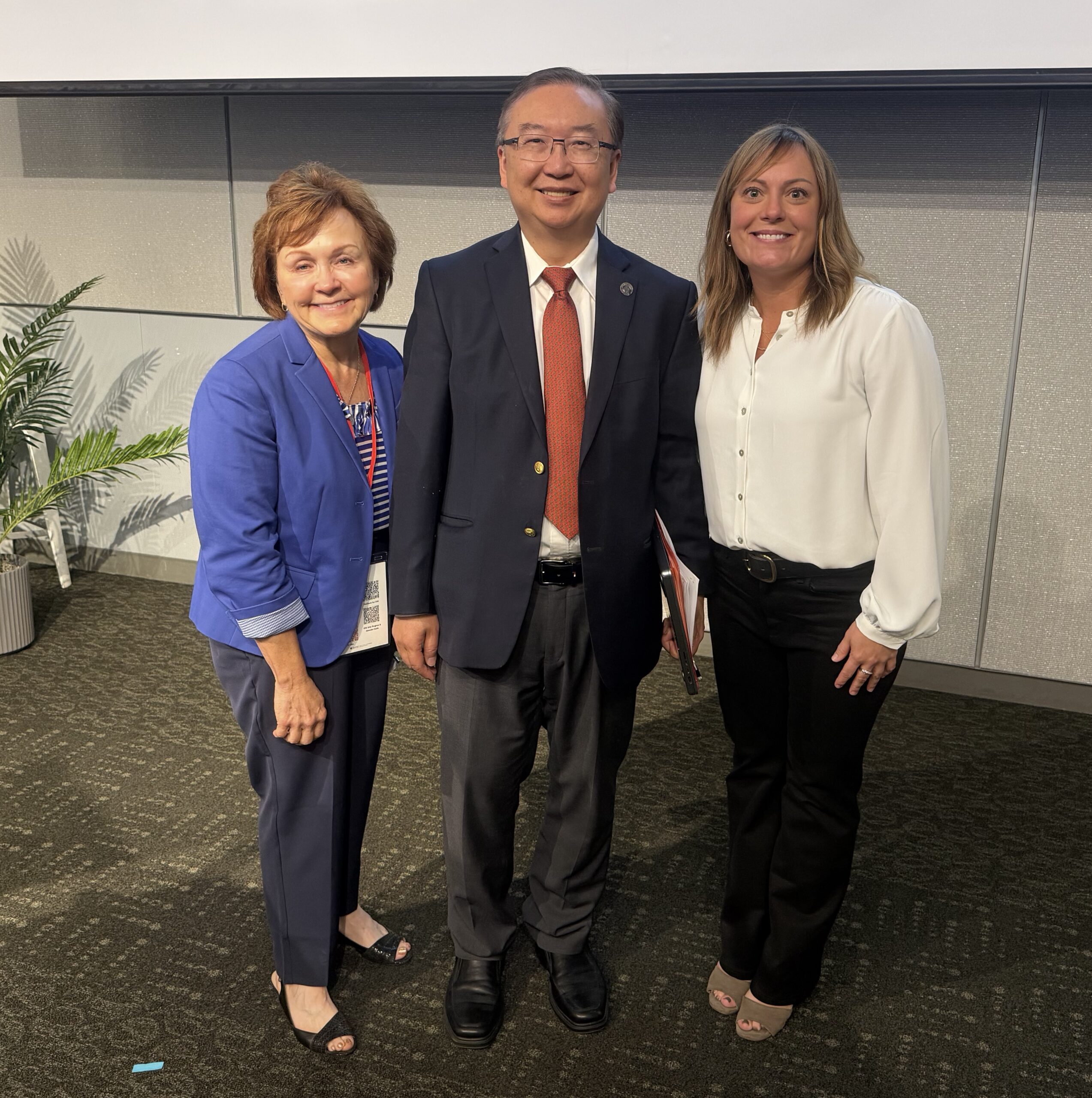
Mary Ellen with Dr. Lawrence Fung and Tarena Shanaberger (Microsoft) at the Neurodiversity Summit 2026.
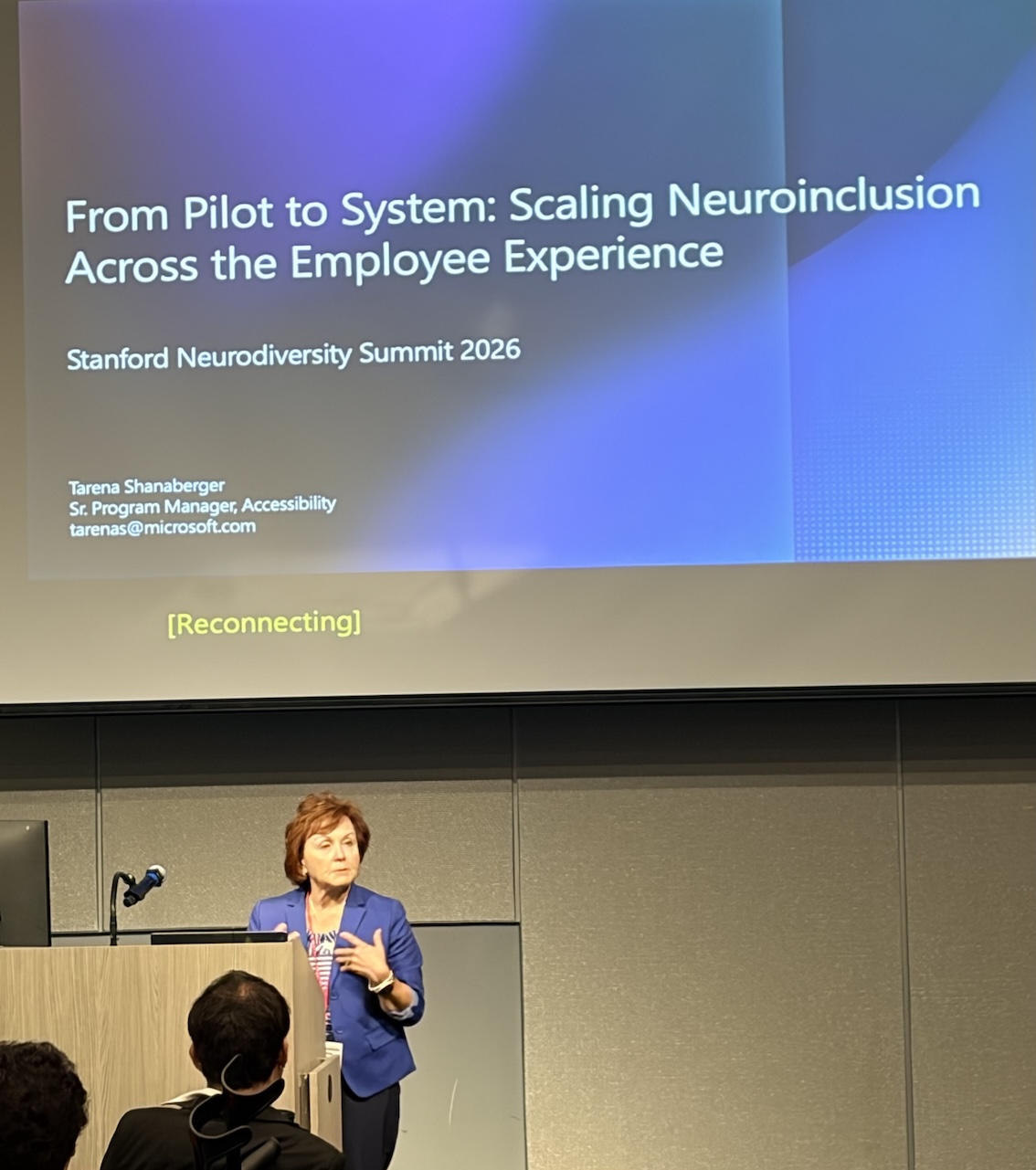
Mary Ellen addressing attendees at Stanford's Neurodiversity Summit 2026.
At the same time, I found deep fulfillment mentoring students across the university. Guest lecturing in Design Thinking classes for both graduate and undergraduate students allowed me to blend storytelling, leadership experience, and coaching, helping students explore how to design meaningful lives aligned with their values and aspirations. Their curiosity, resilience, and willingness to rethink their own paths inspired me daily and reminded me how energizing it is to support people at pivotal moments in their lives.
The impact of DCI didn’t end when the program did. It sparked two defining new paths. The first was my continued partnership and Advisory role with Dr. Fung and the Center for Neurodiversity and Human Potential, where I remain engaged in helping expand the reach and impact of neurodiversity research. The second was the creation of a transitions‑focused program rooted in identity, mattering, and design thinking — themes often overlooked during major life changes. After returning to Ohio, I developed and began piloting this program across the NE Ohio region helping people navigate change with greater clarity and confidence. I am now exploring university partnerships to scale its reach.
Alongside these new endeavors, I continue serving on public and nonprofit boards, applying decades of leadership experience to organizations committed to expanding opportunity and inclusion. Across all of this work, research, coaching, board service, the through‑line is clear: helping people and institutions recognize potential that might otherwise be overlooked.
DCI didn’t just open a new chapter. It reshaped the trajectory of my engagement - connecting lived experience, scholarship, and purpose in ways I never anticipated — and in ways that continue to allow me to grow.