
Knowing When to Leave is the Hardest Part
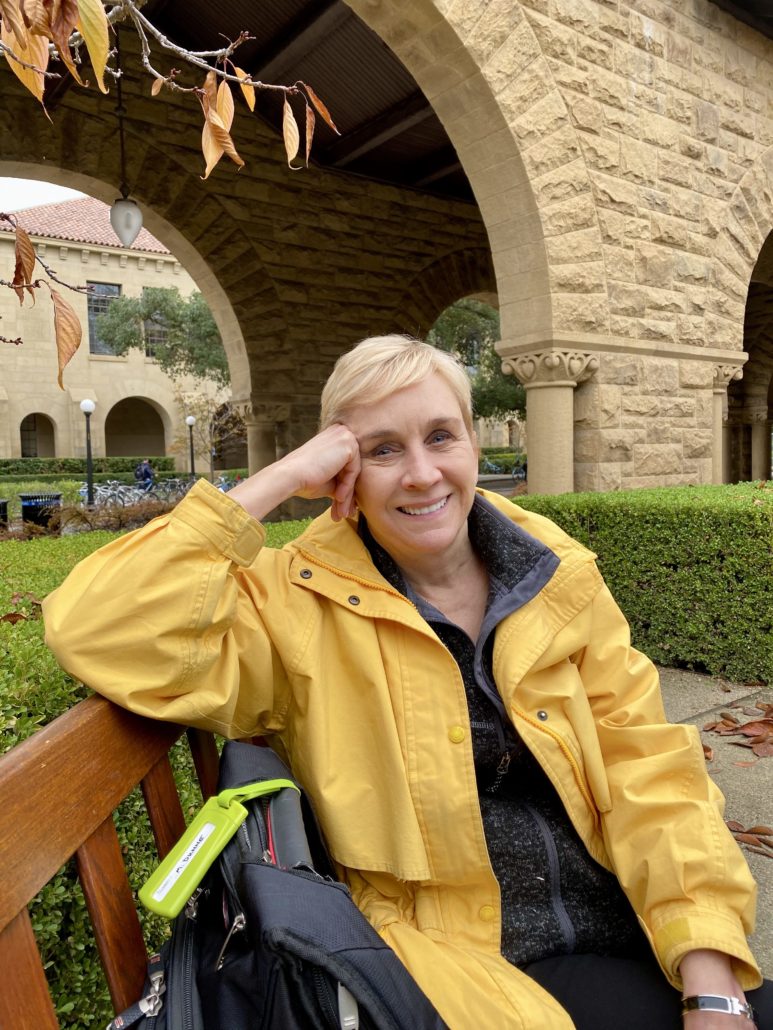
MARY LAURENCE DUNNE, MD
(DCI 2019)
A leader in palliative medicine in New York’s Hudson Valley, Mimi Dunne is engaged in innovation to address suffering and improve the care of the dying.
When the Covid pandemic arrived in the spring of 2019, Mimi and her DCI cohort experienced an unexpected detour. Together they met this challenge with much innovation and improvisation.
In her post-DCI years, Mimi continues to seek opportunities for growth and development.
KNOWING WHEN TO LEAVE
When you ask Mary Laurence Dunne MD, “Mimi” to her friends, what influenced her choices in life, you are likely to get a surprising answer. I asked Mimi this question and without hesitation she told me the song, Knowing When to Leave, by Burt Bacharach. In particular, the line, “Knowing when to leave may be the smartest thing anyone can learn.”
“The song, a Broadway throwback, was the subject of my first conversation about DCI with Phil Pizzo,” she said. “Phil had published a 2017 opinion essay, Navigating Transitions and Charting New Paths, on that very theme. My medical career taught me not to take life and health for granted, and to prepare for the future. After twenty years spent building a palliative care program, I was ready for exploration and growth. Our daughter Catharine was launched; Jack and I had downsized at home and at work. Our goal was to create a “lock up and leave” lifestyle, though we weren’t yet sure where we were going.”
Mimi looked at her options and decided the Stanford Distinguished Careers Institute was the answer. Her husband Jack Keene, a physician entrepreneur, was equally excited about the transition.
“Who makes 40 new friends in maturity?” she marvels about their 2019 DCI cohort. “More than friends: fellow pilgrims. The generosity of spirit extends throughout the DCI community and continues beyond the academic year.”
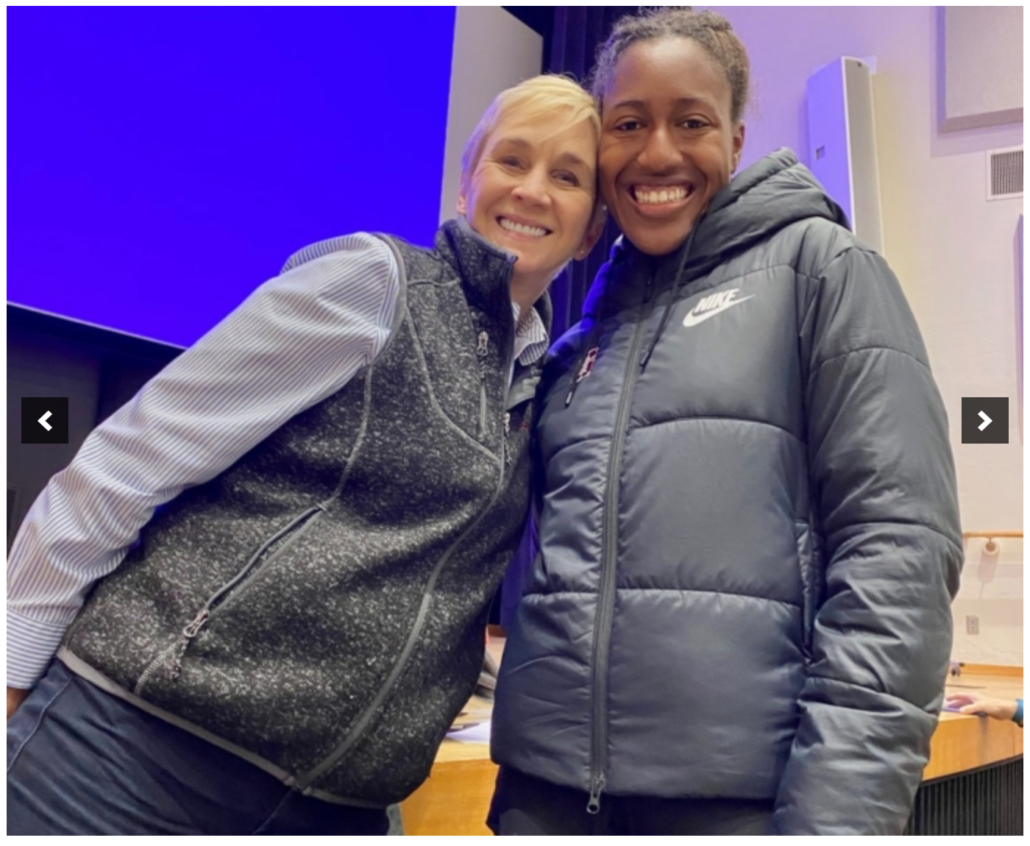
Mimi poses with Jordan Oakes (Stanford 2021), whom she became acquainted with while taking an art history class together. Photo by Rocky Blumhagen (DCI 2019)
ONCE AT STANFORD…
Once at Stanford, Mimi was determined to explore broadly. Her favorite courses included French conversation, How to Look at Art and Why with Alexander Nemerov, Longevity with Laura Carstensen, Winning Writing with Glenn Kramon, Rock, Sex, and Rebellion with Mark Applebaum, and Africa Table, a weekly lunch lecture series featuring speakers from around the world. But serendipity led her back to medicine.
Mimi attended a 2019 Stanford conference, Reclaiming the Legacy of Elisabeth Kübler-Ross, celebrating the donation of the iconic Swiss-American psychiatrist’s archives to the Stanford Libraries Department of Special Collections. There she met documentary filmmaker Maren Monsen, M.D., of the Stanford Center for Biomedical Ethics, which led to volunteering as Maren’s research assistant to curate the video archives. Mimi recalls being inspired as an undergraduate by a course based on the groundbreaking 1969 Kübler-Ross book, On Death and Dying.
“It’s been a humbling privilege and a full-circle experience,” Mimi reflected. “The video footage is so vibrant. It’s like accompanying Elisabeth at the University of Chicago 50 years ago.”
As the academic year of 2019-2020 approached Spring Quarter, the reality of Covid pushed courses online. DCI Founding Director Phil Pizzo, an infectious disease specialist, regularly updated DCI staff, Fellows, and Partners on the latest science of Covid. In addition to their Stanford courses, Mimi and Jack supported their New York hospital’s Covid units, covering weekends via phone and telemedicine to assist on-ground colleagues during the surge.
“We were very grateful to be at Stanford at the start of the pandemic,” Mimi said. “In addition to Phil’s expertise and the support of our DCI cohort, the University and Santa Clara County moved quickly to protect the campus and the community.
Reflections on Life After DCI
What next? After one short year, she became a research assistant, an advisor to an artificial intelligence start-up, a Stanford co-instructor, a TechStars mentor, a DCI Writes presenter and participant, and a Longevity Design Challenge Advisor. Not to mention a friend and colleague, and a mentor to a variety of students.
“The opportunities for engagement in the collaborative culture of Stanford are rich and varied. There are so many open doors. It’s extraordinary.”
So as the Bacharach song continues, “Sail when the wind starts to blow . . .” Mimi recently enrolled in Stanford’s Master in Liberal Arts program, a four-year commitment.
“I’m dazzled by the Stanford community. I was an English major before pre-med studies, and there is so much to explore.”
Written by Donna Slade (DCI 2017)
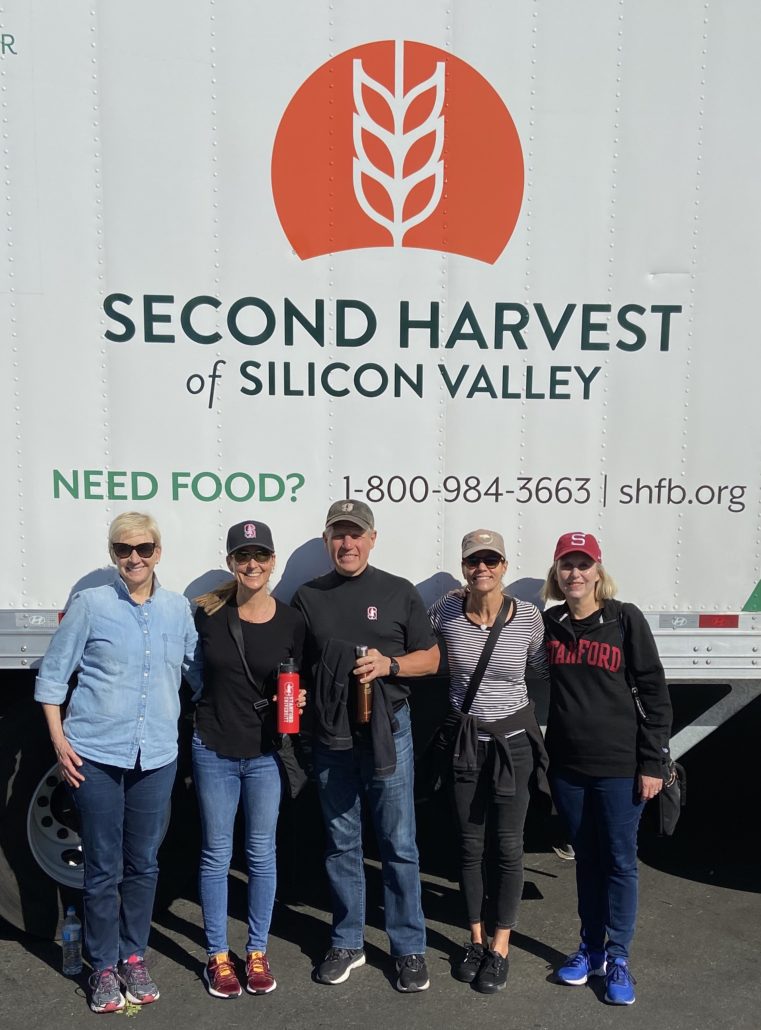
Mimi always seizes opportunities to serve – shown here with her DCI colleagues assisting the Second Harvest of Silicon Valley. Left to right: Mimi Dunne, Brandi Barker, Chris Deyo, Silvia Barbara, and Anne Makepeace.
"Mary Ellen exemplifies the mission of the DCI Fellowship. Through her intellectual leadership, strategic insight, and deep commitment to inclusion, she has made significant contributions to the Stanford Center for Neurodiversity and Human Potential.
As a trusted advisor to the Center, she has helped shape ideas and initiatives that advance understanding, opportunity, and belonging for neurodivergent individuals. Her work contributes to a growing global dialogue on how diverse minds strengthen organizations, enrich communities, and unlock human potential. Her efforts embody the transformative influence that one dedicated leader can have in creating a more inclusive and innovative world."
Dr. Lawrence Fung
Director, Stanford Medicine Center for Neurodiversity and Human Potential, Associate Professor of Psychiatry and Behavioral Sciences (Major Laboratories & Clinical Translational Neurosciences Incubator)
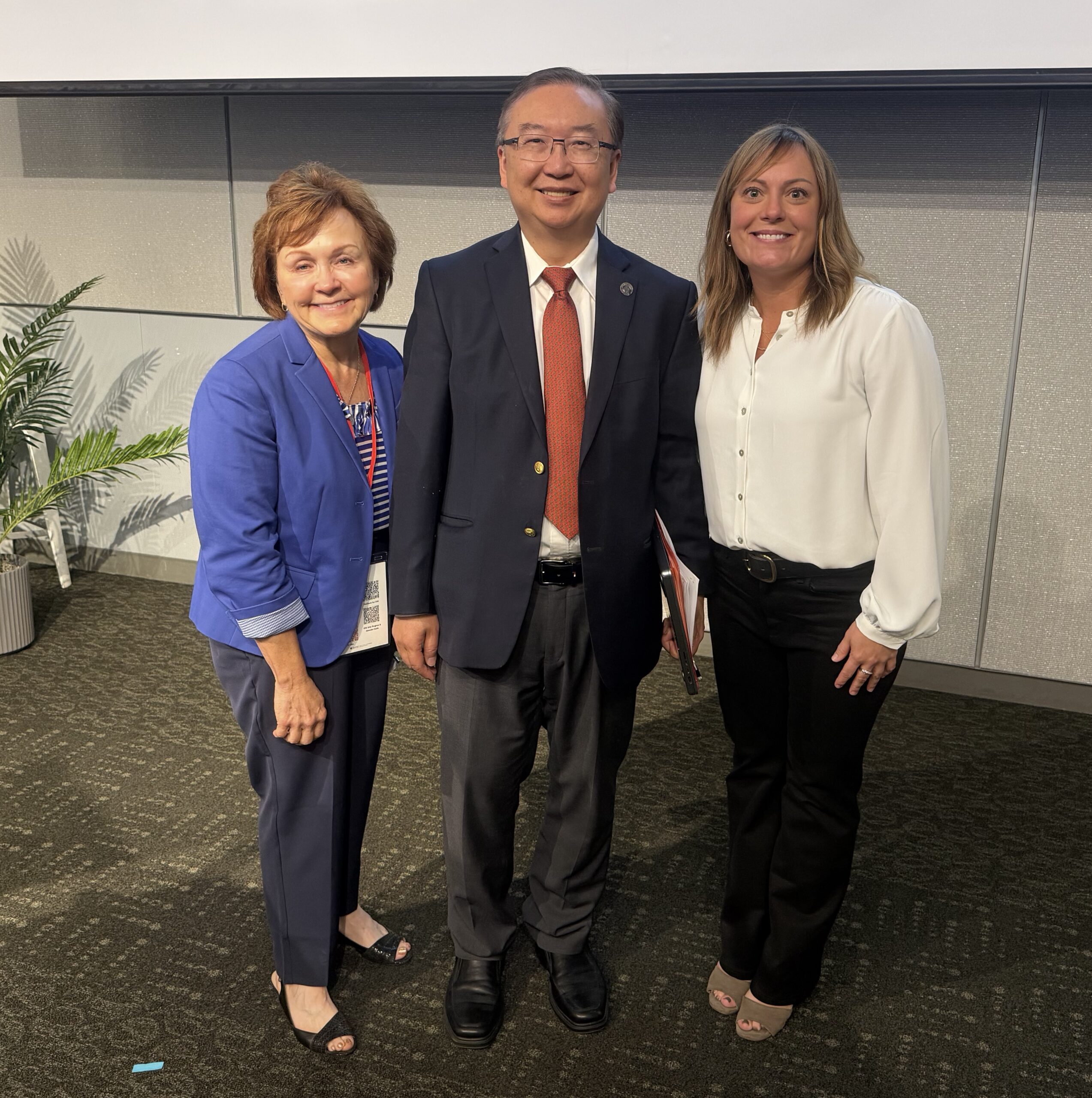
Mary Ellen with Dr. Lawrence Fung and Tarena Shanaberger (Microsoft) at Stanford's Neurodiversity Summit 2026.
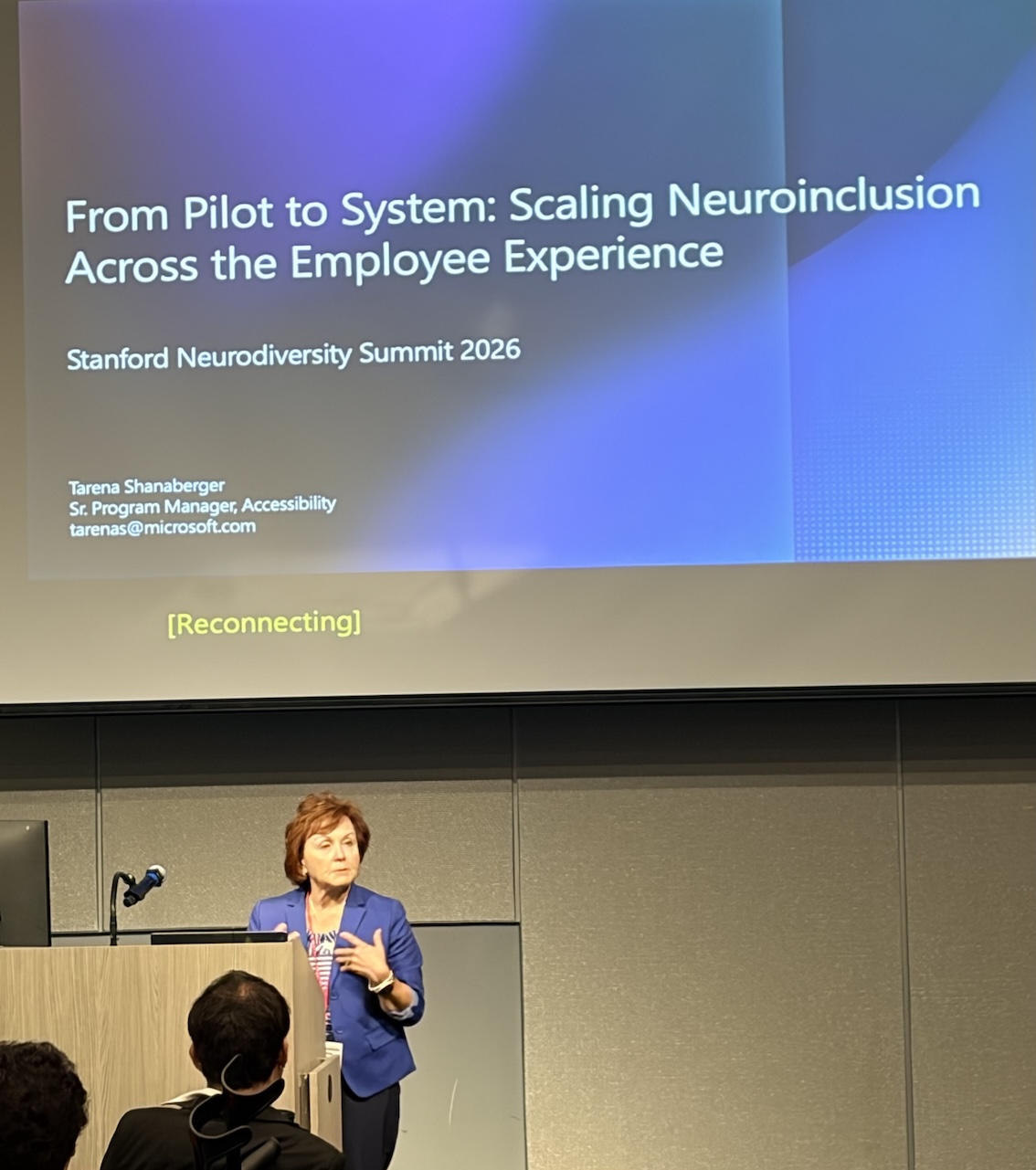
Mary Ellen addressing attendees at Stanford's Neurodiversity Summit 2026.
At the same time, I found deep fulfillment mentoring students across the university. Guest lecturing in Design Thinking classes for both graduate and undergraduate students allowed me to blend storytelling, leadership experience, and coaching, helping students explore how to design meaningful lives aligned with their values and aspirations. Their curiosity, resilience, and willingness to rethink their own paths inspired me daily and reminded me how energizing it is to support people at pivotal moments in their lives.
The impact of DCI didn’t end when the program did. It sparked two defining new paths. The first was my continued partnership and Advisory role with Dr. Fung and the Center for Neurodiversity and Human Potential, where I remain engaged in helping expand the reach and impact of neurodiversity research. The second was the creation of a transitions‑focused program rooted in identity, mattering, and design thinking — themes often overlooked during major life changes. After returning to Ohio, I developed and began piloting this program across the NE Ohio region helping people navigate change with greater clarity and confidence. I am now exploring university partnerships to scale its reach.
Alongside these new endeavors, I continue serving on public and nonprofit boards, applying decades of leadership experience to organizations committed to expanding opportunity and inclusion. Across all of this work, research, coaching, board service, the through‑line is clear: helping people and institutions recognize potential that might otherwise be overlooked.
DCI didn’t just open a new chapter. It reshaped the trajectory of my engagement - connecting lived experience, scholarship, and purpose in ways I never anticipated — and in ways that continue to allow me to grow.