
Never Stop Exploring:
Attorney to Journalist

JOE DWORETZKY
(DCI 2018)
After 35 years of practicing law in Philadelphia and San Francisco, Joe Dworetzky (DCI 2018) earned a Master’s Degree in Journalism at Stanford and is firmly ensconced in an encore career of reporting, cartooning, and creative writing.
Joe’s DCI Experience:
When Joe moved to San Francisco from Philadelphia in 2011, he stepped away from practicing law full-time to explore a longstanding interest in creative writing and cartooning. Although he appreciated this new freedom to write, Joe found it “a lonely way to spend your days.” He hadn’t yet built a community in the Bay Area, and missed the camaraderie and shared purpose he enjoyed at his law firm. Several years into his new life in the Bay Area, Joe ran into Richard Chow (DCI 2017) on the sidelines of their daughters’ high school soccer game. Richard talked about his Stanford DCI experiences, and Joe “applied to DCI the same night.” “DCI,” Joe says, “had everything that was interesting to me.” He got an apartment at The Marc in downtown Palo Alto, “made a cohort of new lifetime friends” at a time when he least expected to, and discovered a proclivity for journalism that landed him the following year at Stanford’s Journalism School, where he earned a Master’s Degree in 2020. Joe has the distinction of being the first DCI Fellow to earn a Stanford degree after completing the DCI program.

Life as a Working Journalist and Writer
Joe credits the DCI experience with his personal comfort level and success as a journalism student. He loved engaging with undergraduates and graduate students while attending classes as a DCI Fellow, and was delighted by how willing students were to interact and build relationships with members of his DCI cohort. As a student in the Master’s Program, Joe became particularly close with his study group who, he is convinced, initially agreed to include Joe because he was a ringer for the required “Journalism Law” course.
Post-graduation, Joe works six months out of the year as both a Legal Affairs and Arts & Culture reporter for Bay City News. He devotes the other six months to his creative writing and cartooning. Joe is a serious and daily writer of fiction, nonfiction and memoir. His Master’s Thesis, “Taking Shelter,” is a compendium of interviews he conducted with people around world about their personal pandemic narratives. Joe has since produced a second volume of interviews, “Masked,” and contemplates a third book in the series. He firmly believes that the “social history of the pandemic has merit,” and should be recorded and reported. “I can see years of projects laid out in front of me,” Joe notes. “I am very ambitious about my writing.”
Reflections on the Present and Future
Joe has been writing creatively for most of his life, but first pursued publication at the age of 60. Publishing, he says, has been both “liberating and validating.” The opportunity to engage with new readers has been a particular pleasure, and has provided him with “an impetus to keep writing.”
Joe emphasizes that his experiences at DCI allowed him to clarify and pursue the things that are most important to him going forward. “I’m doing what I want to do,” Joe says, “staying close to family and friends,” “writing things I’m interested in, “improving my reporting and creative” product, and “getting better at the things that matter to me.”
Learn more about Joe Dworetzky’s writing, reporting and cartooning at https://joedworetzky.com/.
Click here for a compendium of Joe’s reporting: https://authory.com/JoeDworetzky
Stay current with Joe’s professional activities – follow him on Twitter: @JoeDworetzky

Joe Dworetzky and Mark Clapper (DCI 2018) at Joe’s graduation ceremony, Stanford University, June 2022
"Mary Ellen exemplifies the mission of the DCI Fellowship. Through her intellectual leadership, strategic insight, and deep commitment to inclusion, she has made significant contributions to the Stanford Center for Neurodiversity and Human Potential.
As a trusted advisor to the Center, she has helped shape ideas and initiatives that advance understanding, opportunity, and belonging for neurodivergent individuals. Her work contributes to a growing global dialogue on how diverse minds strengthen organizations, enrich communities, and unlock human potential. Her efforts embody the transformative influence that one dedicated leader can have in creating a more inclusive and innovative world."
Dr. Lawrence Fung
Director, Stanford Medicine Center for Neurodiversity and Human Potential, Associate Professor of Psychiatry and Behavioral Sciences (Major Laboratories & Clinical Translational Neurosciences Incubator)
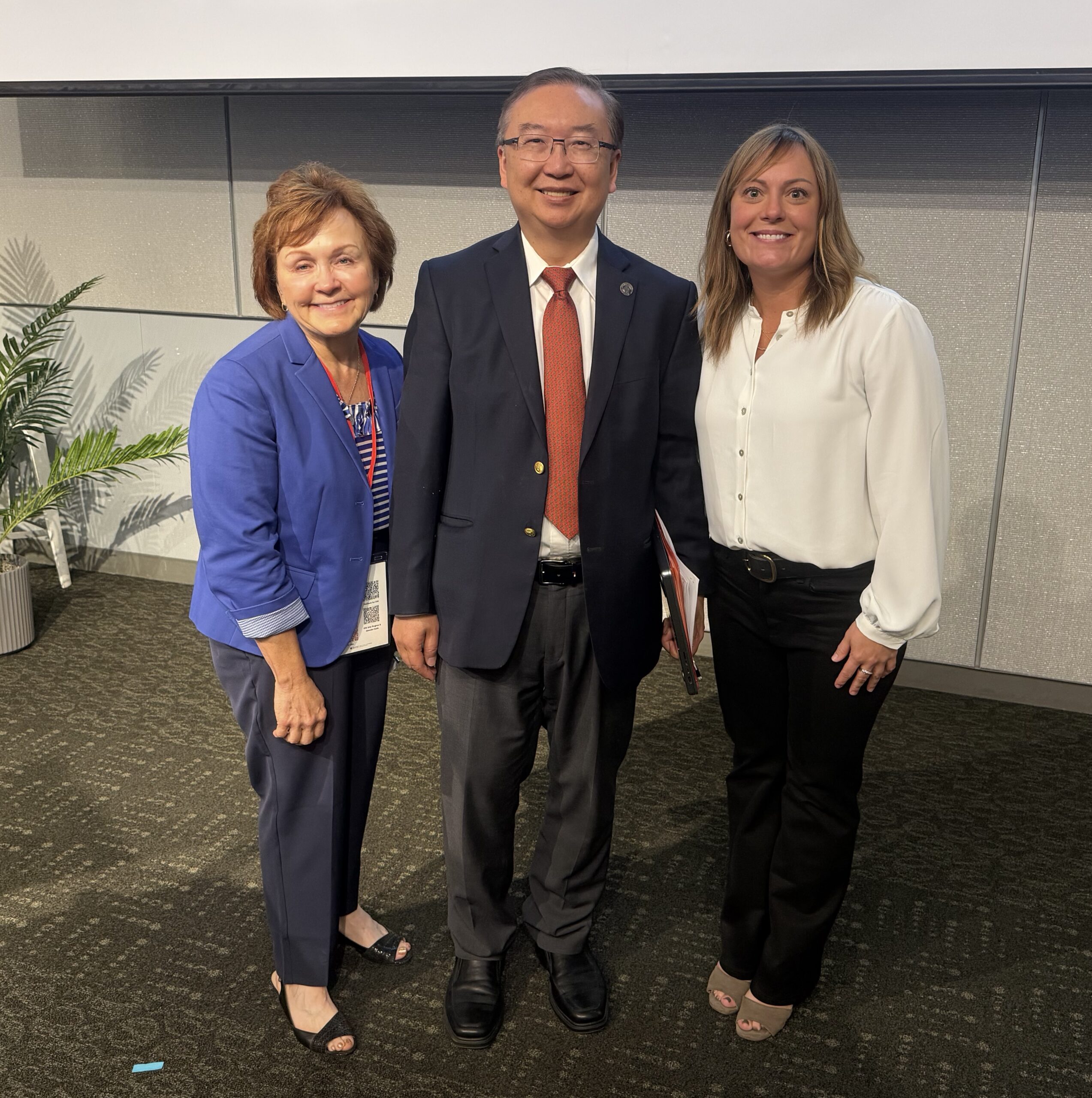
Mary Ellen with Dr. Lawrence Fung and Tarena Shanaberger (Microsoft) at Stanford's Neurodiversity Summit 2026.
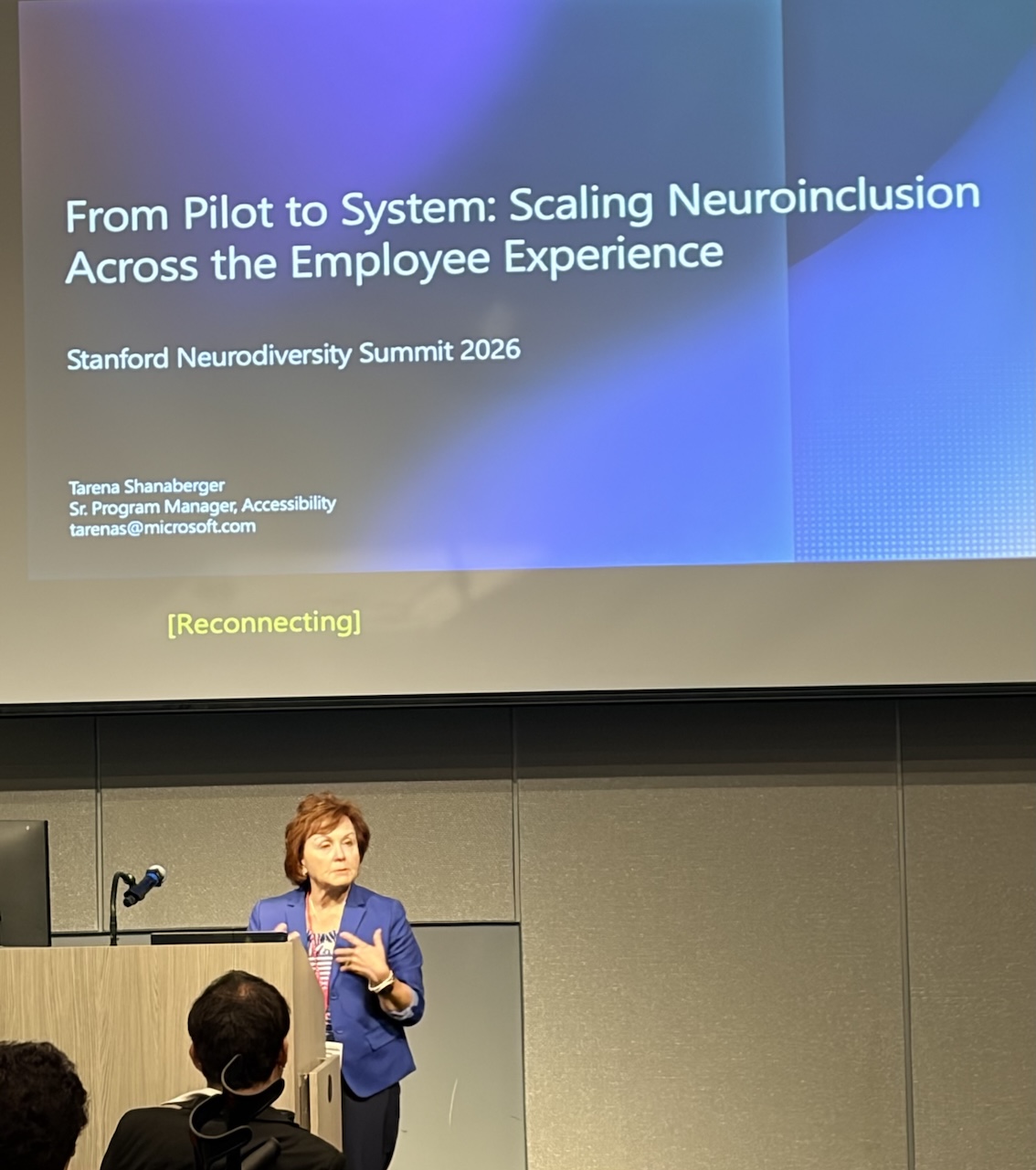
Mary Ellen addressing attendees at Stanford's Neurodiversity Summit 2026.
At the same time, I found deep fulfillment mentoring students across the university. Guest lecturing in Design Thinking classes for both graduate and undergraduate students allowed me to blend storytelling, leadership experience, and coaching, helping students explore how to design meaningful lives aligned with their values and aspirations. Their curiosity, resilience, and willingness to rethink their own paths inspired me daily and reminded me how energizing it is to support people at pivotal moments in their lives.
The impact of DCI didn’t end when the program did. It sparked two defining new paths. The first was my continued partnership and Advisory role with Dr. Fung and the Center for Neurodiversity and Human Potential, where I remain engaged in helping expand the reach and impact of neurodiversity research. The second was the creation of a transitions‑focused program rooted in identity, mattering, and design thinking — themes often overlooked during major life changes. After returning to Ohio, I developed and began piloting this program across the NE Ohio region helping people navigate change with greater clarity and confidence. I am now exploring university partnerships to scale its reach.
Alongside these new endeavors, I continue serving on public and nonprofit boards, applying decades of leadership experience to organizations committed to expanding opportunity and inclusion. Across all of this work, research, coaching, board service, the through‑line is clear: helping people and institutions recognize potential that might otherwise be overlooked.
DCI didn’t just open a new chapter. It reshaped the trajectory of my engagement - connecting lived experience, scholarship, and purpose in ways I never anticipated — and in ways that continue to allow me to grow.