
Intergenerational and International Perspectives
Enrich the Classroom Experience

Gabriel Cheong, an educator, currently a Vice-Principal in Singapore, participated in Stanford’s Graduate School of Education (GSE) Master’s program with the goal of learning and getting direct exposure to the American education system. His expectations were exceeded and his year was greatly enriched by meaningful interactions with
DCI Fellows.
In 2021, Gabriel Cheong and his wife, Olivia Lim, discussed the possibility of moving their family to the USA for a year in order to learn more about the American education system.
“I chose Stanford for the diverse and vast range of expertise of the faculty and students, as well as the small class sizes in Stanford Graduate School of Education (GSE). I was certain that I wanted to learn and gain experience that I would not be able to obtain in Singapore.”
Both Gabriel and Olivia received invitations to join GSE’s small and selective Master’s cohort that would include former NFL and Stanford quarterback, Andrew Luck and many outstanding American and international educators. Additionally, Gabriel and Olivia got to know several DCI Fellows, who enriched their Stanford journey through intergenerational learning and collaboration in the classroom and beyond. Following are their stories of connection and how Gabriel and the Fellows learned from and helped each other as they were thinking about what’s next.
The Ethnographer Connects with the Education Philanthropist
In the quiet of her California home, Karen Leshner (DCI 2021) pored over “Empowered Educators” by Linda Darling-Hammond, about high performing school systems around the world. As she read about Singapore’s educational system, her curiosity grew. Teachers, highly esteemed and well-supported, were not bound to classrooms all day. In Singapore teachers spend approximately half of their time in the classroom. The other half of their time is used for lesson preparation, professional development and running extra-curricular programs. With her own foundation’s mission focused on uplifting teachers, Karen felt a spark of inspiration and was eager to learn more.
In the fall of 2022, Karen and Gabriel both enrolled in a Qualitative Research Methods class. Gabriel remembers the moment they met. “When Karen found out I was from Singapore, she almost jumped out of her seat. She exclaimed ‘you are the guy I need to speak with!’”
Schools in Singapore’s education system are centrally run by the national Ministry of Education and it consistently ranks as one of the best education systems in the world. Schools are well-funded and are not dependent on support from external sources such as foundations. Applying an ethnographic lens, Gabriel wondered why educational philanthropy exists in the USA and what does it do?
Karen took Gabriel under her wing. They met weekly over lunch to discuss their curiosity about each other’s worlds. “Karen was the perfect teacher. She even took me on a ‘field trip’ to a large convention in Dallas consisting of education foundations of all sizes.” In the end Gabriel decided to focus his capstone project on Intrepid, the small family educational foundation created by Karen.
Gabriel spent six months exploring the world of Intrepid, including interviewing their advisory board (consisting predominantly of educators) and reviewing applications for Intrepid’s annual LIGHT Awards which provide direct financial support to teachers to support their professional growth.
His final research product, “What is the Role of Small Family Foundations in K-12 Education?” was a thoughtful exploration of the role of philanthropy in US education, and a case study of how Karen’s small foundation is making an impact.
Karen reflects, “One of the best things that happened to me during my DCI experience was meeting Gabriel. The rapport we built working together in classes and on his field research project is only the beginning of a lifelong friendship and collaboration I know we’ll maintain in the years ahead.”

Gabriel at his poster session with Karen Leshner (DCI 2021) and Jenny Maehara (Stanford ‘’06, MA ’07 and co-creator of the Intrepid LIGHT Awards)
Learning Religion and more
Kelly Kramer, (DCI 2021) met Gabriel in the “Learning Religion” class. After sharing their professional backgrounds, Gabriel comments, “We wondered whether Googlers or McKinsey staff would consider their company culture akin to their religion.”
“The class was an eclectic combination of students with different opinions and Gabriel was an integral part of accelerating the class discussions with reality, humor, and learning,” recalls Kelly. “He was quick to question and ask for clarity when needed and his comments and challenges always brought learning and more understanding and a different perspective.”
Summing it up, Kelly notes “My DCI experience was definitely enhanced by meeting and working with both Gabriel and his wife on educational and research ideas. Their intelligence and view from another country added value to both classes.”
Teacher to Teacher
Gabriel and Chip Vetter (DCI 2021), educator and former banker got to know each other well in their Entrepreneurial Education class during fall quarter at the Graduate School of Business (GSB), then in a Teacher Professional Development seminar at the GSE the following quarter.
“From the first, it was clear to me that our interest in and commitment to education dovetailed, as did our pragmatic, evidenced-based approach to education reform,” recalls Chip.
Mutual Learning and Treasured Friendships
When the end of the academic year approached, Gabriel presented his capstone project, an amazing summary of what he had learned about American educational foundations, with the focus on Intrepid. It was a bittersweet moment for both Gabriel and the DCI Fellows – basking in the joy of what they shared over the past year and a tinge of sadness knowing Gabriel would be returning to Singapore.
Gabriel reflects “The DCI community was an immense treasure trove of insights for post-graduate students like me. Through my courses in the Graduate School of Education and Graduate School of Business, I had the good fortune of meeting Karen, Kelly and Chip, who added another 20-years of experience to each of my classes, bringing with them C-suite experience, stories of failure, grit, and an invigorating sense of purpose.”
The intergenerational experience enriched these DCI Fellows. Chip shares “I learned a great deal from Gabriel about Singapore’s approach to education and how dissimilar it is from ours, yet how many of the challenges are the same. Gabriel’s take on the many issues was often different from mine, but always enlightening.”
Karen, Kelly and Chip will always remember their time shared with this unique educator from across the world. Chip remarks, “I would not be surprised if Gabriel became Singapore’s Minister of Education some day!”
By Kristin Goldthorpe, Stanford DCI Communications Manager
"Mary Ellen exemplifies the mission of the DCI Fellowship. Through her intellectual leadership, strategic insight, and deep commitment to inclusion, she has made significant contributions to the Stanford Center for Neurodiversity and Human Potential.
As a trusted advisor to the Center, she has helped shape ideas and initiatives that advance understanding, opportunity, and belonging for neurodivergent individuals. Her work contributes to a growing global dialogue on how diverse minds strengthen organizations, enrich communities, and unlock human potential. Her efforts embody the transformative influence that one dedicated leader can have in creating a more inclusive and innovative world."
Dr. Lawrence Fung
Director, Stanford Medicine Center for Neurodiversity and Human Potential, Associate Professor of Psychiatry and Behavioral Sciences (Major Laboratories & Clinical Translational Neurosciences Incubator)
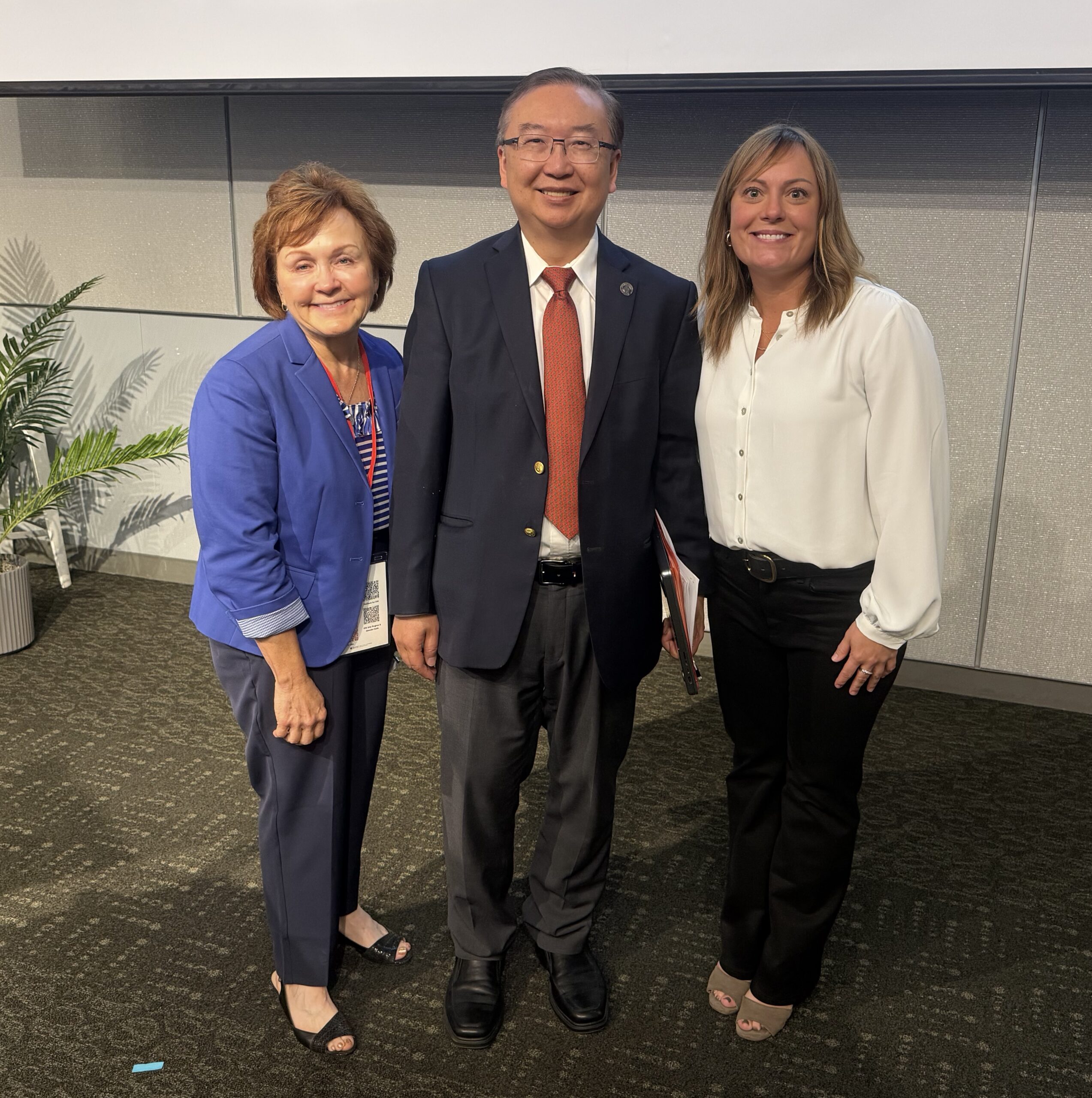
Mary Ellen with Dr. Lawrence Fung and Tarena Shanaberger (Microsoft) at Stanford's Neurodiversity Summit 2026.
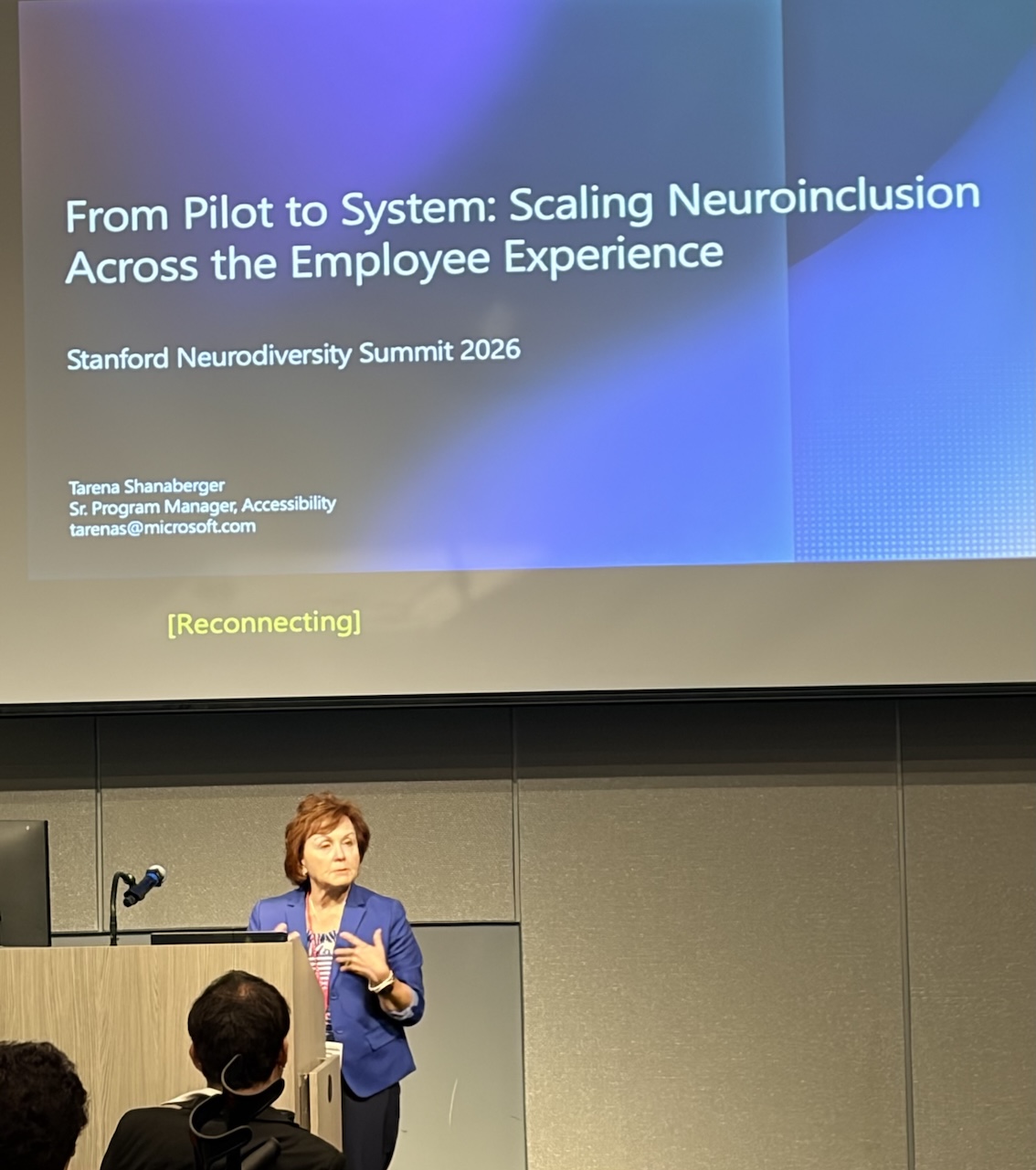
Mary Ellen addressing attendees at Stanford's Neurodiversity Summit 2026.
At the same time, I found deep fulfillment mentoring students across the university. Guest lecturing in Design Thinking classes for both graduate and undergraduate students allowed me to blend storytelling, leadership experience, and coaching, helping students explore how to design meaningful lives aligned with their values and aspirations. Their curiosity, resilience, and willingness to rethink their own paths inspired me daily and reminded me how energizing it is to support people at pivotal moments in their lives.
The impact of DCI didn’t end when the program did. It sparked two defining new paths. The first was my continued partnership and Advisory role with Dr. Fung and the Center for Neurodiversity and Human Potential, where I remain engaged in helping expand the reach and impact of neurodiversity research. The second was the creation of a transitions‑focused program rooted in identity, mattering, and design thinking — themes often overlooked during major life changes. After returning to Ohio, I developed and began piloting this program across the NE Ohio region helping people navigate change with greater clarity and confidence. I am now exploring university partnerships to scale its reach.
Alongside these new endeavors, I continue serving on public and nonprofit boards, applying decades of leadership experience to organizations committed to expanding opportunity and inclusion. Across all of this work, research, coaching, board service, the through‑line is clear: helping people and institutions recognize potential that might otherwise be overlooked.
DCI didn’t just open a new chapter. It reshaped the trajectory of my engagement - connecting lived experience, scholarship, and purpose in ways I never anticipated — and in ways that continue to allow me to grow.