
Doing the Math

GREG DAVIDSON
(DCI 2018/19)
Greg Davidson’s DCI experience provided the time and space to step back from his law career and consider new avenues. As a result, Greg traded the courtroom for the classroom, discovering a passion for sharing his time and talents with high school students.
DOING THE MATH
After 30 years as a corporate attorney at one of the top law firms in the country, Greg Davidson (DCI 18-19) now finds himself standing at the front of a classroom when the school bell rings at 8:30 am every weekday.
Even though Greg found his work at the law firm deeply satisfying, he’d begun to wonder if it was time to start exploring different paths.
“I had gone straight from undergrad to law school, and then worked for the same firm for my entire legal career,” said Greg. “I enjoyed it, but I had also been doing the same thing for 30 years, and there was a part of me that wondered if I would regret it if that’s all I did.”
Calling DCI “the perfect landing spot after deciding to pull the ripcord and retire from law,” Greg describes his DCI experience as transformational.
“It can be difficult to lift your head up and look around for other opportunities when you’re so busy doing your job,” Greg explained. “You don’t often have a lot of extra time, so it’s hard to think about switching careers, and certainly hard to find other jobs.”
While teaching had been a possibility in the back of his mind, it wasn’t until the second half of his DCI year that a more purposeful plan began to take shape. “It was not like I had an epiphany one day,” Greg said, “but as time went on, I found myself becoming more and more excited about the idea of becoming a teacher.”
After two years teaching middle school math in Redwood City, CA during the pandemic, Greg is currently in his first year as a geometry and algebra teacher at a private high school near his home in Menlo Park, CA – the same school his two children attended almost a decade ago. He said he loves many aspects of his new role, but none more than the opportunity to help students learn.
“The cool part about being a teacher is that you must be “on” and ready to perform when the bell rings,” Greg said. “You’re up in front of the class, all eyes are on you, and you’re in charge of educating the students and imparting wisdom. It can be stressful but it’s a type of stress that I really enjoy.”
After deciding to pursue teaching, choosing a subject to focus on was easy. Greg has always had an aptitude for math, excelling in the subject as a high school student himself, and routinely using algebra while working with his corporate legal clients to figure out capitalization tables, merger and acquisition consideration, and other complex financial issues lawyers need to weigh in on.
When talking to Greg about being a teacher, his passion and enthusiasm are plainly evident.
“Even the most challenging student is the best,” he said. “They’re still just high school students, and it’s all part of the learning and maturation process.”
It’s also apparent how much Greg is enjoying this new role. “I’m really energized by being with my students and being in the classroom,” he said with a smile. “On a scale of one to ten, this job is easily a nine, and on most days, it’s a ten or higher.”
Written by Melissa Dyrdahl (2018/19)

On a recent trip to Switzerland, Greg and his wife, Helen Wilmot, enjoyed time visiting with fellow DCIers, Herb and Jeanine Riband (DCI 2018-19).
"Mary Ellen exemplifies the mission of the DCI Fellowship. Through her intellectual leadership, strategic insight, and deep commitment to inclusion, she has made significant contributions to the Stanford Center for Neurodiversity and Human Potential.
As a trusted advisor to the Center, she has helped shape ideas and initiatives that advance understanding, opportunity, and belonging for neurodivergent individuals. Her work contributes to a growing global dialogue on how diverse minds strengthen organizations, enrich communities, and unlock human potential. Her efforts embody the transformative influence that one dedicated leader can have in creating a more inclusive and innovative world."
Dr. Lawrence Fung
Director, Stanford Medicine Center for Neurodiversity and Human Potential, Associate Professor of Psychiatry and Behavioral Sciences (Major Laboratories & Clinical Translational Neurosciences Incubator)
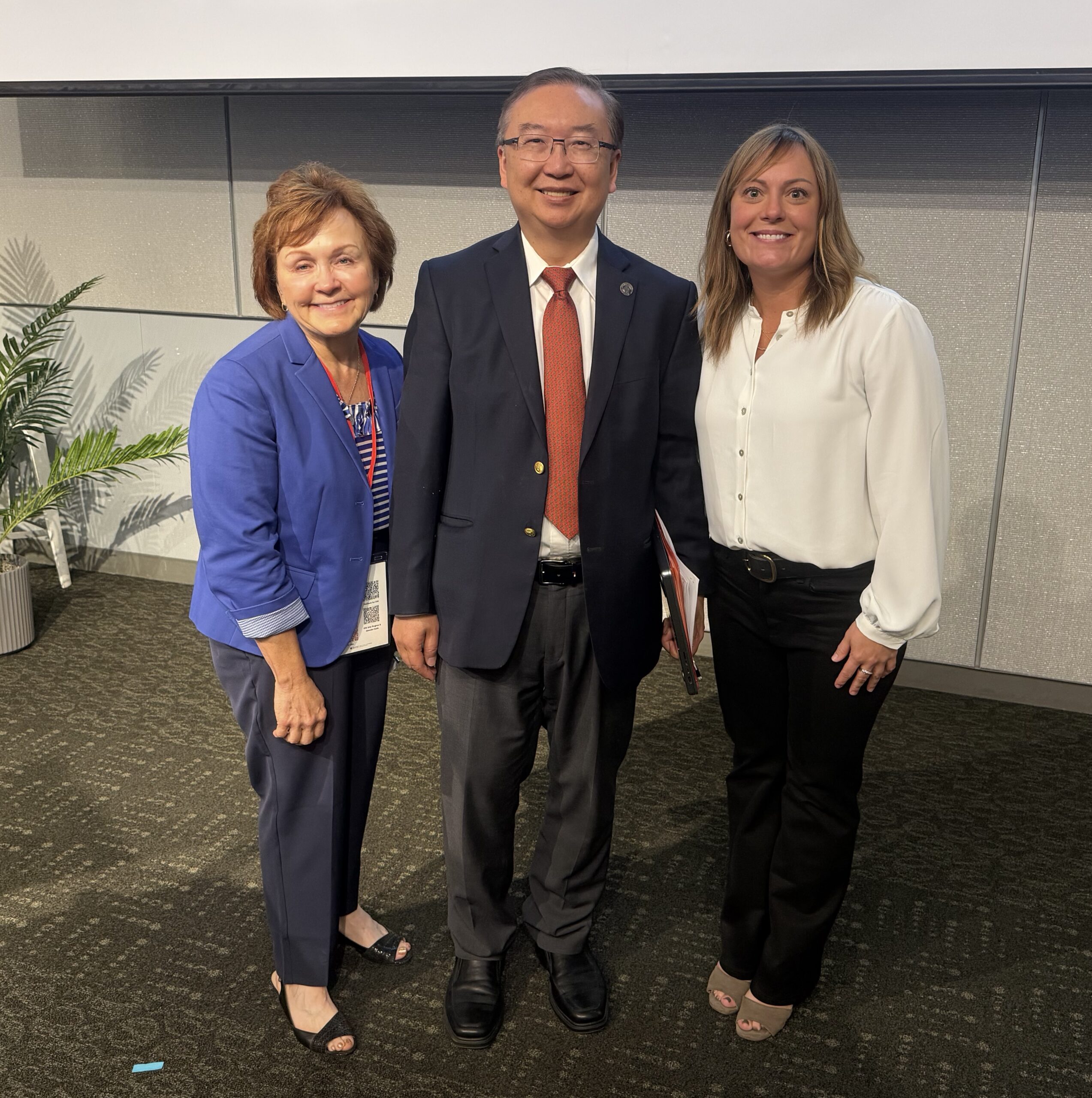
Mary Ellen with Dr. Lawrence Fung and Tarena Shanaberger (Microsoft) at Stanford's Neurodiversity Summit 2026.
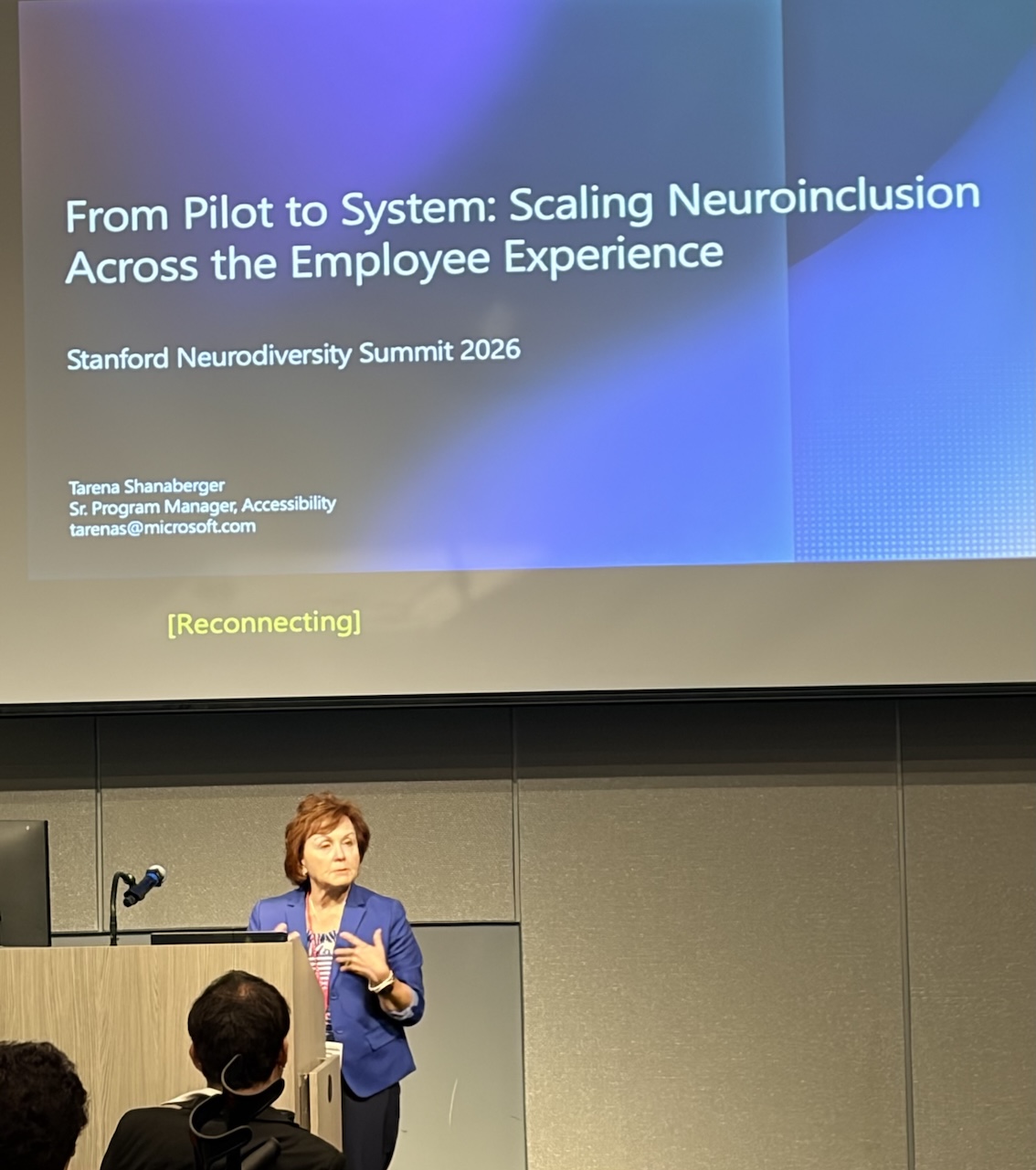
Mary Ellen addressing attendees at Stanford's Neurodiversity Summit 2026.
At the same time, I found deep fulfillment mentoring students across the university. Guest lecturing in Design Thinking classes for both graduate and undergraduate students allowed me to blend storytelling, leadership experience, and coaching, helping students explore how to design meaningful lives aligned with their values and aspirations. Their curiosity, resilience, and willingness to rethink their own paths inspired me daily and reminded me how energizing it is to support people at pivotal moments in their lives.
The impact of DCI didn’t end when the program did. It sparked two defining new paths. The first was my continued partnership and Advisory role with Dr. Fung and the Center for Neurodiversity and Human Potential, where I remain engaged in helping expand the reach and impact of neurodiversity research. The second was the creation of a transitions‑focused program rooted in identity, mattering, and design thinking — themes often overlooked during major life changes. After returning to Ohio, I developed and began piloting this program across the NE Ohio region helping people navigate change with greater clarity and confidence. I am now exploring university partnerships to scale its reach.
Alongside these new endeavors, I continue serving on public and nonprofit boards, applying decades of leadership experience to organizations committed to expanding opportunity and inclusion. Across all of this work, research, coaching, board service, the through‑line is clear: helping people and institutions recognize potential that might otherwise be overlooked.
DCI didn’t just open a new chapter. It reshaped the trajectory of my engagement - connecting lived experience, scholarship, and purpose in ways I never anticipated — and in ways that continue to allow me to grow.